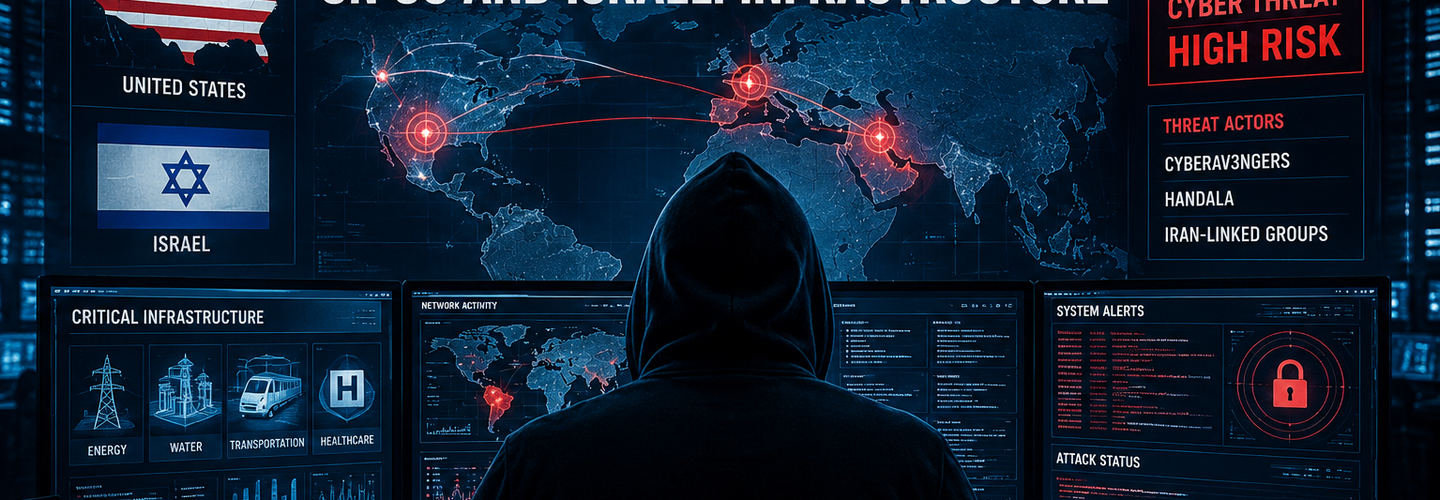
Cyber Group Backing Iran Threatens Digital Attacks on US and Israeli Infrastructure
Escalating geopolitical tensions in the Middle East are once again spilling into cyberspace, as a pro-Iran threat actor has publicly threatened coordinated cyberattacks targeting critical infrastructure in the United States and Israel. Security analysts say the rhetoric reflects a broader pattern in which politically motivated hacking groups use cyber operations to amplify regional conflicts, spread fear, and pressure governments through digital disruption rather than traditional military engagement.
The warnings, circulated across encrypted messaging channels and underground forums monitored by threat intelligence researchers, have reignited concerns among cybersecurity agencies and infrastructure operators already grappling with a surge in state-aligned cyber activity. While there is no confirmed evidence yet of widespread destructive attacks linked directly to the latest threats, experts caution that organizations in sectors such as energy, telecommunications, transportation, healthcare, and finance should remain on heightened alert.
Cybersecurity officials note that even unsuccessful campaigns can trigger operational disruptions, reputational damage, and increased incident response costs, particularly when threat groups leverage public fear to magnify psychological impact.
## Threat Overview
Researchers tracking Iran-aligned cyber operations say the latest statements appear consistent with tactics historically associated with ideologically motivated hacktivist collectives and state-linked cyber actors operating in support of Tehran’s strategic interests.
These groups often focus on:
- ▸Distributed denial-of-service (DDoS) disruptions
- ▸Website defacement campaigns
- ▸Credential theft operations
- ▸Data leak threats
- ▸Targeting internet-facing infrastructure
- ▸Psychological influence campaigns through social media amplification
Analysts emphasize that public threats do not always translate into technically sophisticated attacks. However, they frequently coincide with increased scanning activity, phishing attempts, or opportunistic targeting of poorly secured systems.
Over the past several years, Iran-linked cyber operations have repeatedly drawn attention from Western intelligence agencies. The US Cybersecurity and Infrastructure Security Agency (CISA), the FBI, and allied governments have issued multiple advisories warning organizations about evolving tactics associated with Iranian cyber groups, particularly during periods of geopolitical instability.
Security researchers say the current environment increases the probability of “spillover cyber activity,” where organizations outside government or defense sectors become indirect targets due to supply chain connections or regional affiliations.
## Technical Impact Analysis
Although no verified large-scale infrastructure compromise has been publicly attributed to the latest threats at the time of writing, cybersecurity teams are paying close attention to several high-risk areas.
Critical Infrastructure Exposure
Industrial environments remain a significant concern. Utilities and operational technology (OT) networks often contain legacy systems that are difficult to patch or isolate. Threat actors do not necessarily need to breach core industrial controls to create disruption; targeting administrative systems, external portals, or communication infrastructure can still impact operations.
According to IBM’s X-Force Threat Intelligence Index and multiple government advisories issued in recent years, critical infrastructure organizations continue to face elevated targeting from nation-state and ideologically aligned actors because downtime in these sectors can create disproportionate public pressure.
Increased Phishing and Credential Theft Risks
Threat intelligence teams also expect an uptick in phishing campaigns disguised as geopolitical news alerts, emergency notifications, or infrastructure-related communications. These campaigns frequently attempt to harvest employee credentials or deliver malware capable of maintaining persistence within enterprise environments.
Cybersecurity firms warn that attackers often capitalize on emotionally charged news cycles. Employees distracted by breaking geopolitical developments may be more likely to engage with malicious emails or fake collaboration requests.
Website Disruptions and Public-Facing Services
Historically, hacktivist campaigns linked to geopolitical conflicts have heavily targeted public-facing websites and online services. While such attacks may not always result in data breaches, prolonged outages can still disrupt customer operations and damage organizational credibility.
Cloud service providers and content delivery networks have significantly improved DDoS mitigation capabilities in recent years, but smaller organizations with limited cybersecurity budgets may remain vulnerable to traffic flooding campaigns.
Supply Chain Concerns
Another major concern involves third-party service providers. Security analysts increasingly warn that threat actors may target smaller vendors or contractors connected to larger infrastructure operators. Weaknesses in software supply chains or managed service providers can provide indirect access to sensitive environments.
The software supply chain remains one of the cybersecurity industry’s most scrutinized risk areas following several high-profile breaches over the past decade.
## Industry Implications
The latest threats arrive at a time when governments worldwide are investing heavily in cyber resilience initiatives. Public and private sector organizations have spent the past several years modernizing defenses against ransomware, espionage operations, and politically motivated cyber campaigns.
Still, experts argue that geopolitical cyber threats present unique challenges because their objectives may extend beyond financial gain.
“State-aligned threat actors often prioritize disruption, signaling, and psychological impact over immediate monetization,” said one threat intelligence analyst monitoring Middle Eastern cyber operations. “That changes how organizations need to think about resilience.”
Financial Sector Concerns
Banks and financial institutions remain frequent symbolic targets during geopolitical crises. Even limited service interruptions can erode consumer confidence and attract widespread media attention.
Financial regulators in several countries have urged institutions to review incident response procedures and strengthen monitoring around unusual authentication activity, phishing attempts, and anomalous network traffic.
Healthcare and Public Services at Risk
Healthcare organizations also face elevated risk because operational downtime can directly affect patient care. Hospitals continue to struggle with aging infrastructure, staffing shortages, and expanding attack surfaces driven by connected medical devices and digital transformation efforts.
Cybersecurity experts warn that politically motivated cyber incidents targeting healthcare systems can have severe real-world consequences even if attackers do not deploy destructive malware.
Rising Pressure on Security Teams
The broader cybersecurity workforce shortage further complicates defense efforts. Many organizations lack the internal staffing needed for 24/7 monitoring and advanced threat hunting, leaving defenders stretched thin during periods of heightened geopolitical tension.
Managed security providers are already reporting increased demand for incident response readiness assessments and external monitoring services.
## Why This Matters
The significance of these threats extends beyond individual cyber incidents.
Modern infrastructure ecosystems are deeply interconnected. A disruption affecting one organization can quickly ripple across suppliers, customers, transportation networks, healthcare providers, and government services.
Cybersecurity experts increasingly describe geopolitical cyber operations as part of a larger “hybrid conflict” environment where digital activity, disinformation campaigns, and economic pressure intersect.
Even when attacks fail to cause lasting technical damage, they can still:
- ▸Trigger public panic
- ▸Disrupt essential services
- ▸Increase operational costs
- ▸Overwhelm security teams
- ▸Undermine trust in digital systems
- ▸Create political and economic instability
The psychological dimension is particularly important. Public threats alone can force organizations to divert resources toward emergency preparedness and defensive operations.
In addition, the normalization of politically motivated cyber campaigns raises long-term concerns about escalation. Analysts fear that repeated retaliatory cyber activity between rival states or aligned groups could increase the likelihood of accidental disruption to civilian systems.
## How Users Can Stay Safe
While critical infrastructure operators face the highest risk, individual users and businesses should also take precautions during periods of elevated cyber threat activity.
Enable Multi-Factor Authentication
Multi-factor authentication (MFA) remains one of the most effective defenses against credential theft. Organizations should prioritize phishing-resistant MFA methods wherever possible.
Be Cautious With Breaking News Links
Threat actors frequently exploit major geopolitical events through fake news alerts, malicious attachments, and fraudulent donation campaigns. Users should verify information through trusted sources before clicking links or downloading files.
Patch Internet-Facing Systems
Security teams should prioritize patching externally exposed applications, VPN gateways, remote access tools, and firewalls. Vulnerabilities in internet-facing systems are often heavily targeted during politically charged campaigns.
Monitor for Suspicious Activity
Organizations should increase monitoring for:
- ▸Unusual login attempts
- ▸Authentication anomalies
- ▸Unexpected outbound traffic
- ▸Privilege escalation activity
- ▸DNS irregularities
Review Incident Response Plans
Preparedness remains critical. Organizations should ensure incident response contacts, backup procedures, and communication plans are current and tested.
Segment Critical Systems
Network segmentation can help reduce operational impact if attackers gain access to part of an environment. Separating business networks from operational technology systems remains a widely recommended defensive practice.
Train Employees Regularly
Human error continues to play a major role in cyber incidents. Security awareness training can reduce the likelihood of successful phishing or social engineering attacks.
## Official Responses
Government agencies and cybersecurity organizations have continued urging infrastructure operators to strengthen defensive measures amid the evolving threat landscape.
CISA has repeatedly emphasized the importance of proactive defense strategies, including vulnerability management, network visibility, and resilience planning for critical infrastructure sectors.
Several international cybersecurity agencies have also increased intelligence-sharing efforts related to nation-state and geopolitically motivated cyber threats.
Meanwhile, major cloud providers and cybersecurity firms report heightened monitoring across customer environments connected to sensitive sectors.
Security vendors have advised organizations not to dismiss public hacktivist threats outright, even when the groups involved have limited technical sophistication. Opportunistic campaigns targeting unpatched systems can still produce widespread disruption if organizations fail to maintain baseline cyber hygiene.
Industry analysts also note that public attribution remains difficult during fast-moving geopolitical events. Threat actors may exaggerate capabilities, falsely claim attacks, or attempt to manipulate public perception through coordinated online messaging.
## Sources & References
- ▸CISA Cybersecurity Advisories
- ▸FBI Cyber Division
- ▸IBM X-Force Threat Intelligence
- ▸Microsoft Threat Intelligence Blog
- ▸CrowdStrike Threat Research
- ▸Mandiant Threat Intelligence
## Conclusion
As geopolitical tensions continue influencing cyber activity worldwide, organizations can no longer treat politically motivated cyber threats as isolated incidents confined to government agencies or defense contractors. Critical infrastructure providers, private enterprises, healthcare systems, and financial institutions all operate within an increasingly interconnected digital environment where regional conflicts can rapidly create global cybersecurity consequences.
The latest threats from a pro-Iran cyber group may ultimately prove more symbolic than operational, but security experts warn that complacency remains dangerous. Even low-complexity attacks can disrupt operations when organizations fail to maintain strong cyber hygiene and incident preparedness.
For defenders, the current moment underscores a broader reality facing the cybersecurity industry: resilience, visibility, and rapid response capabilities are becoming just as important as prevention itself.
Read More:
IRDAI Orders Insurance Firms to Strengthen Defences Against AI-Powered Cyberattacks by May 22
Cybersecurity Analysts Examine Potential Risks Following Claude Mythos AI Developments
New WordPress Plugin Vulnerability Raises Risk of Unauthorized Website Access
How Agentic AI Is Changing Software Engineering and Expanding Mobile Attack Surfaces
UK Says AI-Fueled Cyber Risks Are Tied to Security Weaknesses Rather Than Repository Transparency
Everpure strengthens cyber resilience by positioning data management as the final layer of defence
Gremlin Stealer Conceals C2 URLs and Exfiltration Paths in Encrypted Resource Sections
## Analyst Commentary & Implementation Blueprint
Security advisory
Continuous security exposure assessment is critical to identifying public vulnerabilities before they are exploited. Organizations should maintain a passive inventory of all web servers, TLS configs, and open ports, ensuring that default configurations are eliminated and security advisories are actively implemented.
Hardened Security Configuration Blueprint
# General Security Hardening Directive
ServerTokens ProductOnly
ServerSignature Off
FileETag None
Actionable Mitigation Checklist
- ✔Perform passive asset inventories weekly.
- ✔Restrict administrative ports using local firewall controls.
- ✔Monitor active CVE alerts for exposed software.
Common Inquiries & FAQs
Why is passive scanning preferred for continuous auditing?
Passive audits do not cause operational impact or trigger firewall blocks, making them ideal for constant surveillance of internet-facing assets.
What should I do if a vulnerability is flagged?
Apply the latest vendor patches, restrict access to the resource via firewalls, or verify configuration flags to mitigate risks.
Surendra Reddy
Surendra Reddy is a cybersecurity researcher and founder of ReconShield, specializing in OSINT and defensive infrastructure analysis.
Connect on LinkedIn ↗// AUDIT BRIEFING DISCUSSION (2 COMMENTS)
Great breakdown of the passive infrastructure vectors. We recently audited our external DNS zones and found multiple dangling staging environments. Implementing wildcard certificates reduced our CT log leaks significantly.
Is there any automated tooling you recommend for daily crt.sh scraping? Manually checking CT logs is becoming unsustainable for our domain portfolio.
// MORE ARTICLES
Security Researchers Warn Critical n8n Flaws May Expose Automation Platforms to RCE
Researchers have disclosed critical vulnerabilities in n8n that could expose automation workflows and connected enterprise systems to remote code execution risks, prompting urgent patch recommendations for users and administrators.
How Agentic AI Is Changing Software Engineering and Expanding Mobile Attack Surfaces
Agentic AI is rapidly transforming software engineering workflows through automation and intelligent coding assistance, while cybersecurity experts warn of expanding mobile attack surfaces and emerging application security risks.

Critical Tenda Router Backdoor (CVE-2026-11405): Check If Your Device Is Vulnerable Now
CVE-2026-11405 is an unpatched Tenda router backdoor granting full admin access without a password. Check if your model is affected now.