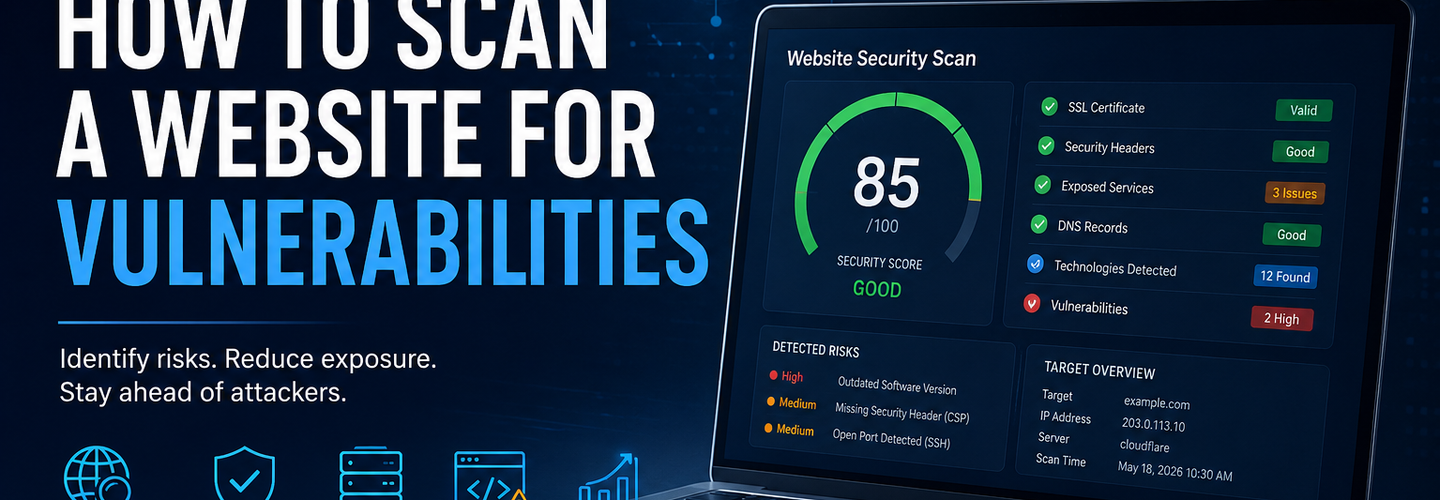
How to Scan a Website for Vulnerabilities in 2026
Modern websites are no longer simple collections of HTML pages. They run on distributed cloud infrastructure, third-party APIs, JavaScript frameworks, CDNs, containers, and dynamically scaling services. That complexity has dramatically expanded the modern attack surface, making security testing more important than ever.
For developers, startup founders, security researchers, and IT teams, understanding how to scan a website for vulnerabilities is now a basic operational requirement. Attackers routinely automate reconnaissance against exposed services, forgotten subdomains, weak SSL configurations, open ports, outdated software, and leaked infrastructure metadata. In many cases, breaches begin with publicly accessible information that organizations never realized was exposed.
The good news is that website vulnerability assessment has become more accessible in 2026. Modern passive scanning platforms and reconnaissance tools can quickly identify risks without requiring deep penetration testing expertise.
This guide explains how modern website scanning works, what you should look for, and how to identify exposure before attackers do.
## Why Website Vulnerability Scanning Matters in 2026
Cyberattacks have shifted heavily toward automated reconnaissance. Threat actors now use bots and AI-assisted tooling to continuously map internet-facing infrastructure looking for weak points.
A single forgotten staging environment, expired SSL certificate, or exposed admin portal can become an entry point into a larger system compromise.
When organizations think about security, they often focus only on application code. In reality, attackers typically begin with infrastructure analysis. They look for:
- ▸Open ports and exposed services
- ▸Misconfigured DNS records
- ▸Weak TLS/SSL settings
- ▸Leaked subdomains
- ▸Publicly exposed IP intelligence
- ▸Outdated technologies
- ▸Cloud storage exposure
- ▸Vulnerable web servers
- ▸Misconfigured headers
This is why understanding how to scan a website for vulnerabilities goes beyond running a single scanner. Effective security assessment combines reconnaissance, passive scanning, metadata collection, and exposure analysis.
Modern security teams continuously monitor their attack surface rather than relying solely on periodic penetration tests.
## Step 1: Start With Passive Reconnaissance
Before actively probing a target, professional security researchers begin with passive reconnaissance.
Passive reconnaissance gathers information without directly interacting aggressively with the target server. This reduces detection risk and avoids unnecessary disruption while still revealing valuable infrastructure details.
Key areas analyzed during passive scanning include:
DNS Intelligence
DNS records often expose hidden infrastructure. Subdomains like:
- ▸dev.example.com
- ▸api.example.com
- ▸vpn.example.com
- ▸staging.example.com
can reveal development environments or internal services accidentally exposed to the internet.
Security analysts review:
- ▸A records
- ▸MX records
- ▸TXT records
- ▸SPF policies
- ▸DMARC configurations
- ▸Nameserver configurations
Poor DNS hygiene can leak internal architecture information useful to attackers.
SSL/TLS Analysis
SSL certificates provide more than encryption. They also reveal:
- ▸Historical domains
- ▸Subdomain relationships
- ▸Certificate issuers
- ▸Expiration timelines
- ▸Weak encryption support
Attackers frequently use certificate transparency logs during reconnaissance.
Infrastructure Fingerprinting
Modern scanners identify:
- ▸Web server technologies
- ▸CDN providers
- ▸Cloud infrastructure
- ▸Hosting environments
- ▸Reverse proxies
- ▸Exposed services
Infrastructure analysis helps defenders understand what attackers can already see publicly.
Tools like ReconShield simplify this process by combining passive scanning with exposure analysis in a single interface.
## Step 2: Identify Exposed Services and Public Attack Surface
The next phase in how to scan a website for vulnerabilities involves identifying exposed services connected to the target environment.
Every internet-facing service increases risk exposure.
Commonly exposed services include:
- ▸HTTP/HTTPS
- ▸SSH
- ▸FTP
- ▸Remote desktop services
- ▸Database ports
- ▸Mail servers
- ▸Kubernetes dashboards
- ▸Admin panels
Attackers actively scan the internet searching for these exposed services because many organizations accidentally leave management interfaces publicly accessible.
Why Attack Surface Visibility Matters
Your attack surface includes every publicly reachable asset associated with your organization.
This may include:
- ▸Websites
- ▸APIs
- ▸Subdomains
- ▸Cloud assets
- ▸IP addresses
- ▸Development environments
- ▸Authentication portals
Many companies underestimate how large their external footprint has become.
For example, marketing teams may deploy separate landing pages, developers may create temporary testing servers, or cloud engineers may expose debugging endpoints. Over time, forgotten assets accumulate.
Attack surface visibility is critical because attackers only need one weak point.
Security researchers therefore prioritize continuous reconnaissance and infrastructure analysis to detect exposure early.
## Step 3: Analyze Website Security Headers and SSL Configuration
Security headers remain one of the simplest yet most overlooked defensive controls.
Modern scanners check whether websites correctly implement protections such as:
- ▸Content-Security-Policy (CSP)
- ▸Strict-Transport-Security (HSTS)
- ▸X-Frame-Options
- ▸Referrer-Policy
- ▸Permissions-Policy
Missing or weak headers increase susceptibility to attacks like:
- ▸Clickjacking
- ▸Cross-site scripting (XSS)
- ▸Data injection
- ▸Session hijacking
SSL/TLS configuration analysis is equally important.
A secure SSL deployment should:
- ▸Support modern TLS versions
- ▸Disable deprecated ciphers
- ▸Use valid certificates
- ▸Avoid weak encryption algorithms
- ▸Maintain proper certificate chains
Weak SSL settings can expose users to interception attacks and significantly reduce trust.
This is especially important for SaaS platforms, fintech services, e-commerce applications, and authentication portals where encrypted traffic is critical.
Modern SSL security scanners now combine certificate validation with infrastructure analysis to identify broader security posture issues.
## Step 4: Detect Technology Risks and Outdated Components
One of the most effective vulnerability discovery techniques involves technology fingerprinting.
Modern web applications depend heavily on third-party software components, including:
- ▸CMS platforms
- ▸JavaScript libraries
- ▸Authentication frameworks
- ▸Analytics integrations
- ▸API gateways
- ▸Container environments
Outdated software remains one of the leading causes of compromise.
Attackers frequently target:
- ▸Old WordPress plugins
- ▸Vulnerable npm packages
- ▸Legacy PHP versions
- ▸Exposed admin frameworks
- ▸Unsupported server software
Even when the core application is secure, supporting infrastructure may introduce exploitable weaknesses.
Modern reconnaissance platforms analyze publicly visible indicators to detect technologies associated with known vulnerabilities.
This helps defenders prioritize remediation before vulnerabilities are weaponized.
For organizations learning how to scan a website for vulnerabilities, this step is essential because it provides actionable insight without requiring intrusive testing.
## Step 5: Monitor IP Reputation and Infrastructure Exposure
Website security does not exist independently from infrastructure security.
Public IP addresses associated with your environment can reveal important risk indicators.
Threat intelligence systems often track IPs linked to:
- ▸Malware distribution
- ▸Spam campaigns
- ▸Phishing infrastructure
- ▸Botnet activity
- ▸Suspicious hosting patterns
If your infrastructure shares hosting environments with malicious activity, reputation systems may flag your IP ranges.
Security teams therefore monitor:
- ▸IP reputation
- ▸ASN associations
- ▸Hosting provider exposure
- ▸Blacklist presence
- ▸Geolocation anomalies
Infrastructure analysis also helps detect shadow IT assets and forgotten deployments.
Platforms like ReconShield IP Scanner help security researchers investigate IP exposure, open services, and infrastructure metadata without requiring complicated setup.
## Common Mistakes Organizations Still Make
Even in 2026, many organizations continue repeating the same security mistakes.
Relying Only on Annual Penetration Tests
Threat exposure changes constantly. Weekly deployments and cloud infrastructure changes can introduce new vulnerabilities overnight.
Continuous monitoring is now more effective than occasional testing.
Ignoring Passive Exposure
Organizations often focus only on application vulnerabilities while overlooking reconnaissance exposure.
Attackers frequently compromise targets using publicly available information alone.
Forgetting External Assets
Old staging servers, abandoned subdomains, and temporary cloud instances commonly remain exposed long after projects end.
Treating SSL as “Set and Forget”
SSL certificates require ongoing monitoring, renewal management, and configuration validation.
Weak TLS settings still create serious risk.
Underestimating Infrastructure Metadata
Public infrastructure information can reveal internal architecture patterns useful for targeted attacks.
Infrastructure analysis helps reduce unnecessary exposure.
## Best Practices for Continuous Website Security Monitoring
Security scanning should become part of regular operational hygiene.
Recommended best practices include:
Perform Routine Passive Scanning
Monitor domains, subdomains, SSL configurations, and DNS changes continuously.
Track Your External Attack Surface
Maintain visibility into all internet-facing assets associated with your organization.
Monitor Exposed Services
Identify newly exposed ports, APIs, and management interfaces quickly.
Audit Third-Party Technologies
Review frameworks, plugins, and dependencies regularly for outdated components.
Use Automated Reconnaissance Tools
Modern reconnaissance platforms dramatically reduce manual effort while improving visibility.
Prioritize Exposure Reduction
The safest service is often the one not exposed publicly.
Reducing attack surface remains one of the most effective defensive strategies available.
## Conclusion
Understanding how to scan a website for vulnerabilities is no longer optional for modern organizations. Attackers automate reconnaissance at massive scale, continuously searching for exposed services, weak SSL configurations, forgotten infrastructure, and publicly accessible metadata.
Effective website security in 2026 requires more than traditional vulnerability scanning. It requires continuous attack surface awareness, passive reconnaissance, infrastructure analysis, and proactive exposure management.
Organizations that actively monitor their external footprint gain a major defensive advantage. They can identify weaknesses before attackers exploit them, reduce unnecessary exposure, and strengthen overall resilience.
Ready to check your own exposure? Use ReconShield's free website vulnerability scanner or IP intelligence scanner no login required.
Read More:
AI-Powered Cyber Threats Are Escalating Faster Than Enterprise Defenses Can Adapt
Urgent Chrome Update Released After Critical Remote Code Execution Vulnerabilities Discovered
Hackers Exploit Vulnerable Lenovo Driver to Disable EDR Security Protections
QR Code Phishing Explodes in 2026 as Microsoft Detects 8.3 Billion Email Threats
Public Exploit Code Emerges for Chromium Flaw Potentially Affecting Millions Worldwide
## Analyst Commentary & Implementation Blueprint
Security advisory
Continuous security exposure assessment is critical to identifying public vulnerabilities before they are exploited. Organizations should maintain a passive inventory of all web servers, TLS configs, and open ports, ensuring that default configurations are eliminated and security advisories are actively implemented.
Hardened Security Configuration Blueprint
# General Security Hardening Directive
ServerTokens ProductOnly
ServerSignature Off
FileETag None
Actionable Mitigation Checklist
- ✔Perform passive asset inventories weekly.
- ✔Restrict administrative ports using local firewall controls.
- ✔Monitor active CVE alerts for exposed software.
Common Inquiries & FAQs
Why is passive scanning preferred for continuous auditing?
Passive audits do not cause operational impact or trigger firewall blocks, making them ideal for constant surveillance of internet-facing assets.
What should I do if a vulnerability is flagged?
Apply the latest vendor patches, restrict access to the resource via firewalls, or verify configuration flags to mitigate risks.
Surendra Reddy
Surendra Reddy is a cybersecurity researcher and founder of ReconShield, specializing in OSINT and defensive infrastructure analysis.
Connect on LinkedIn ↗// AUDIT BRIEFING DISCUSSION (2 COMMENTS)
Great breakdown of the passive infrastructure vectors. We recently audited our external DNS zones and found multiple dangling staging environments. Implementing wildcard certificates reduced our CT log leaks significantly.
Is there any automated tooling you recommend for daily crt.sh scraping? Manually checking CT logs is becoming unsustainable for our domain portfolio.
// MORE ARTICLES

Security Researchers Warn Critical n8n Flaws May Expose Automation Platforms to RCE
Researchers have disclosed critical vulnerabilities in n8n that could expose automation workflows and connected enterprise systems to remote code execution risks, prompting urgent patch recommendations for users and administrators.

How Agentic AI Is Changing Software Engineering and Expanding Mobile Attack Surfaces
Agentic AI is rapidly transforming software engineering workflows through automation and intelligent coding assistance, while cybersecurity experts warn of expanding mobile attack surfaces and emerging application security risks.

SplitVPN Hacked: Data Breach Exposes 865,000 User Records and 58 Million Hidden Connection Logs (July 2026)
SplitVPN hacked: 865,336 user records and 58 million connection logs exposed, directly contradicting the VPN's "no-logs" promise. What was leaked and what to do now.