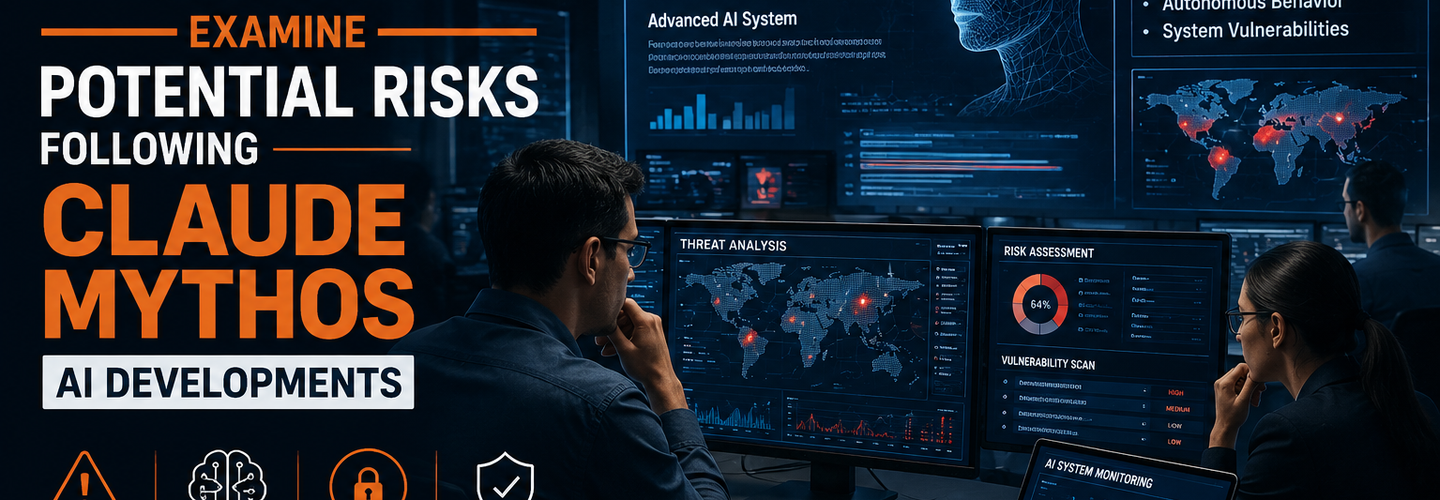
Cybersecurity Analysts Examine Potential Risks Following Claude Mythos AI Developments
Artificial intelligence systems are increasingly becoming central to enterprise operations, software development, customer engagement, and cybersecurity defense. But as AI capabilities continue advancing at an unprecedented pace, security researchers and policy experts are raising fresh concerns about the unintended risks tied to powerful large language models and autonomous reasoning systems.
Recent discussions surrounding the Claude Mythos AI model have triggered renewed scrutiny across the cybersecurity community, with analysts evaluating the broader implications of highly capable AI systems in sensitive digital environments. While no confirmed malicious incident directly linked to the model has emerged publicly, the conversation has quickly expanded into a larger debate around AI governance, operational safety, misuse prevention, and enterprise security preparedness.
The growing attention reflects a wider industry trend: organizations are no longer treating AI security as a future concern. Instead, regulators, enterprises, and cybersecurity teams are increasingly viewing advanced AI systems as a present-day operational risk that requires continuous oversight, transparent safeguards, and robust defensive controls.
## Growing Concerns Around Advanced AI Systems
The rapid evolution of generative AI has transformed how businesses operate. From automating customer support to accelerating software engineering workflows, modern AI systems are now deeply integrated into enterprise environments.
However, cybersecurity professionals warn that increasingly capable AI models may also introduce new forms of digital risk if governance frameworks fail to evolve at the same pace.
The concerns surrounding the Claude Mythos AI developments are not necessarily about a single vulnerability or isolated technical flaw. Instead, analysts are examining broader categories of risk associated with advanced AI deployment, including:
- ▸Misinformation generation
- ▸Autonomous decision-making errors
- ▸Sensitive data exposure
- ▸AI hallucinations in enterprise systems
- ▸Prompt injection risks
- ▸Supply chain integration vulnerabilities
- ▸Insider misuse concerns
- ▸AI-assisted phishing and fraud
- ▸Unintended automation outcomes
Security researchers say the issue is particularly important because enterprises are rapidly integrating AI into business-critical workflows without fully understanding long-term operational implications.
In highly regulated sectors such as healthcare, finance, insurance, and government infrastructure, even small AI-driven inaccuracies or security oversights could create cascading risks.
## Why Cybersecurity Experts Are Paying Attention
Cybersecurity analysts increasingly view advanced AI systems as “high-impact digital infrastructure” rather than ordinary software tools.
This shift in perspective comes as organizations rely on AI for tasks involving:
- ▸Code generation
- ▸Threat analysis
- ▸Customer identity verification
- ▸Fraud detection
- ▸Data processing
- ▸Automated workflows
- ▸Security operations assistance
The larger the AI model’s operational role, the greater the potential impact if errors, manipulation attempts, or governance failures occur.
Several cybersecurity firms have warned that AI-related risks often emerge indirectly. For example, insecure integrations, poor access controls, unverified plugins, or weak API protections may expose organizations to data leakage or operational disruption.
Experts are also monitoring how AI systems interact with external datasets, third-party applications, and enterprise automation tools. The complexity of these interconnected ecosystems can create blind spots for security teams.
According to industry reports, AI adoption in enterprise environments has accelerated faster than many organizations’ internal governance capabilities.
That imbalance is now becoming a central cybersecurity concern.
## Technical Impact Analysis
While discussions surrounding Claude Mythos AI remain largely precautionary, analysts are using the developments as an opportunity to reassess several technical risk areas associated with advanced AI deployments.
Data Privacy and Information Leakage
One of the most significant concerns involves the handling of sensitive enterprise information.
Organizations frequently integrate AI systems with internal documents, databases, customer records, and proprietary workflows. Without strict data governance policies, confidential information could unintentionally be exposed through prompts, logs, or third-party integrations.
Security experts continue to stress the importance of:
- ▸Data minimization
- ▸Access segmentation
- ▸Encryption controls
- ▸Audit logging
- ▸Secure API management
- ▸Employee usage policies
AI Hallucinations and Operational Errors
Large language models can sometimes generate inaccurate or fabricated outputs while appearing highly confident. In enterprise environments, these errors may create compliance, legal, or operational risks.
Cybersecurity analysts note that AI-generated inaccuracies could become especially problematic in sectors involving:
- ▸Financial transactions
- ▸Healthcare recommendations
- ▸Regulatory reporting
- ▸Insurance processing
- ▸Security incident response
Human oversight remains essential, particularly for high-impact decisions.
Prompt Injection and Manipulation Risks
Researchers are also examining how malicious or unexpected inputs may influence AI system behavior.
Prompt injection concerns involve attempts to manipulate model responses, bypass restrictions, or influence automated workflows. Although vendors continue improving safeguards, experts warn that enterprises should avoid treating AI-generated output as inherently trustworthy.
Security teams are increasingly adopting “human-in-the-loop” models to reduce automation risks.
Supply Chain and Plugin Security
Modern AI ecosystems often depend on external plugins, cloud providers, APIs, and integrated development environments.
Each additional integration expands the potential attack surface.
Third-party AI tooling may introduce:
- ▸Misconfigured permissions
- ▸Vulnerable dependencies
- ▸Data-sharing concerns
- ▸Unverified software components
- ▸Insecure authentication mechanisms
Analysts recommend regular security assessments and vendor risk evaluations before deploying AI tools into production environments.
## Industry Implications
The broader cybersecurity implications of advanced AI systems are already reshaping enterprise security strategies worldwide.
Organizations are now facing difficult questions:
- ▸How should AI systems be governed?
- ▸What level of human oversight is required?
- ▸Who is accountable for AI-driven decisions?
- ▸How should sensitive data be protected?
- ▸What happens if AI systems generate inaccurate security recommendations?
The Claude Mythos AI discussions arrive at a time when governments and regulators globally are accelerating AI governance efforts.
In recent months:
- ▸The European Union advanced AI regulatory frameworks
- ▸U.S. agencies increased AI security guidance
- ▸Financial regulators strengthened operational resilience expectations
- ▸Cloud providers introduced stricter AI governance policies
- ▸Enterprises expanded internal AI usage restrictions
Cybersecurity vendors are also adapting rapidly. Many security companies are now integrating AI monitoring tools, governance dashboards, anomaly detection systems, and automated risk scoring mechanisms into enterprise platforms.
The AI security market itself is expected to grow significantly over the next several years as organizations seek better visibility into model behavior and operational risks.
## Why This Matters
The growing scrutiny surrounding advanced AI systems reflects a broader transformation in the cybersecurity landscape.
Artificial intelligence is no longer experimental technology limited to research labs. It now influences business operations, software development, customer interactions, financial systems, and national infrastructure.
As adoption accelerates, even indirect security risks can carry significant consequences.
For enterprises, the challenge is balancing innovation with resilience.
Deploying AI tools without governance frameworks may expose organizations to:
- ▸Compliance failures
- ▸Data privacy incidents
- ▸Reputational damage
- ▸Operational disruptions
- ▸Legal liabilities
- ▸Supply chain exposure
For consumers, AI-related risks may affect privacy, digital trust, and information integrity.
Cybersecurity experts increasingly argue that AI governance should become a core component of enterprise risk management rather than a secondary compliance exercise.
The discussions triggered by Claude Mythos AI developments may ultimately serve as a warning sign for organizations moving too quickly without establishing proper oversight mechanisms.
## How Users Can Stay Safe
Although most AI governance responsibilities fall on enterprises and technology providers, individual users can also reduce exposure to AI-related security risks.
Limit Sensitive Data Sharing
Users should avoid entering confidential financial, medical, or corporate information into public AI tools unless clear privacy protections exist.
Verify AI-Generated Information
AI systems can occasionally produce inaccurate content. Important decisions should always be validated using trusted human expertise or official sources.
Watch for AI-Enhanced Scams
Cybercriminals increasingly use AI-generated phishing emails, fake voice calls, and synthetic media to impersonate trusted individuals or organizations.
Users should independently verify unusual requests involving payments, credentials, or sensitive data.
Use Strong Authentication
Enabling multi-factor authentication (MFA) helps reduce account compromise risks associated with phishing or credential theft.
Monitor Enterprise AI Policies
Employees should follow organizational guidelines governing approved AI tools and data handling practices.
Unauthorized AI usage may unintentionally expose internal company information.
Keep Systems Updated
Maintaining current software updates and security patches helps reduce exposure to vulnerabilities that could affect AI-integrated systems.
## Official Responses and Industry Reaction
Technology companies and cybersecurity organizations continue emphasizing the importance of responsible AI deployment.
Several AI vendors have expanded investments in:
- ▸Model safety testing
- ▸Alignment research
- ▸Abuse prevention systems
- ▸Security audits
- ▸Red teaming exercises
- ▸Transparency reporting
Meanwhile, regulators worldwide are increasingly exploring mandatory governance requirements for advanced AI systems.
Industry experts broadly agree that AI security discussions should focus on proactive risk reduction rather than reactive crisis management.
Security researchers also note that responsible AI development requires collaboration across:
- ▸Technology providers
- ▸Regulators
- ▸Enterprise security teams
- ▸Academic researchers
- ▸Infrastructure operators
- ▸Privacy advocates
The cybersecurity industry is expected to continue refining standards for AI governance, transparency, operational safety, and resilience as adoption expands globally.
## Sources & References
- ▸Public AI governance discussions from major technology firms
- ▸National Institute of Standards and Technology (NIST) AI Risk Management Framework
- ▸Cybersecurity and Infrastructure Security Agency (CISA) AI guidance
- ▸European Union AI Act policy materials
- ▸Industry threat intelligence reports on AI-assisted cyber risks
- ▸Enterprise AI governance research from cybersecurity vendors
- ▸Public statements from AI safety and policy researchers
## Conclusion
The cybersecurity concerns surrounding Claude Mythos AI developments underscore a growing reality facing enterprises worldwide: advanced AI systems are reshaping digital risk faster than many organizations are prepared to manage.
While AI continues delivering substantial operational benefits, the technology also introduces new governance, security, and trust challenges that cannot be ignored.
Cybersecurity analysts are increasingly urging organizations to treat AI systems with the same level of scrutiny applied to critical infrastructure, cloud environments, and sensitive enterprise platforms.
For businesses, the path forward will likely require a careful balance between innovation and accountability. Strong governance policies, transparent oversight, human review processes, and proactive security assessments are becoming essential components of responsible AI adoption.
As AI capabilities continue advancing, the organizations best positioned for long-term resilience may be those that prioritize security and operational safeguards from the beginning rather than after risks emerge.
Read More:
Cybersecurity Agencies Warn Users Against New Digital Fraud Tactics
CISA Warns of Active Exploitation of Microsoft Exchange Server Spoofing Vulnerability
Critical NGINX Vulnerability Under Active Exploitation, Security Teams Urged to Patch Immediately
Security Researchers Warn Critical n8n Flaws May Expose Automation Platforms to RCE
Project Glasswing Evolves as Anthropic Enables Wider Sharing of Mythos Vulnerability Findings
IRDAI Orders Insurance Firms to Strengthen Defences Against AI-Powered Cyberattacks by May 22
## Analyst Commentary & Implementation Blueprint
Security advisory
Continuous security exposure assessment is critical to identifying public vulnerabilities before they are exploited. Organizations should maintain a passive inventory of all web servers, TLS configs, and open ports, ensuring that default configurations are eliminated and security advisories are actively implemented.
Hardened Security Configuration Blueprint
# General Security Hardening Directive
ServerTokens ProductOnly
ServerSignature Off
FileETag None
Actionable Mitigation Checklist
- ✔Perform passive asset inventories weekly.
- ✔Restrict administrative ports using local firewall controls.
- ✔Monitor active CVE alerts for exposed software.
Common Inquiries & FAQs
Why is passive scanning preferred for continuous auditing?
Passive audits do not cause operational impact or trigger firewall blocks, making them ideal for constant surveillance of internet-facing assets.
What should I do if a vulnerability is flagged?
Apply the latest vendor patches, restrict access to the resource via firewalls, or verify configuration flags to mitigate risks.
Surendra Reddy
Surendra Reddy is a cybersecurity researcher and founder of ReconShield, specializing in OSINT and defensive infrastructure analysis.
Connect on LinkedIn ↗// AUDIT BRIEFING DISCUSSION (2 COMMENTS)
Great breakdown of the passive infrastructure vectors. We recently audited our external DNS zones and found multiple dangling staging environments. Implementing wildcard certificates reduced our CT log leaks significantly.
Is there any automated tooling you recommend for daily crt.sh scraping? Manually checking CT logs is becoming unsustainable for our domain portfolio.
// MORE ARTICLES
Security Researchers Warn Critical n8n Flaws May Expose Automation Platforms to RCE
Researchers have disclosed critical vulnerabilities in n8n that could expose automation workflows and connected enterprise systems to remote code execution risks, prompting urgent patch recommendations for users and administrators.
How Agentic AI Is Changing Software Engineering and Expanding Mobile Attack Surfaces
Agentic AI is rapidly transforming software engineering workflows through automation and intelligent coding assistance, while cybersecurity experts warn of expanding mobile attack surfaces and emerging application security risks.

Critical Tenda Router Backdoor (CVE-2026-11405): Check If Your Device Is Vulnerable Now
CVE-2026-11405 is an unpatched Tenda router backdoor granting full admin access without a password. Check if your model is affected now.