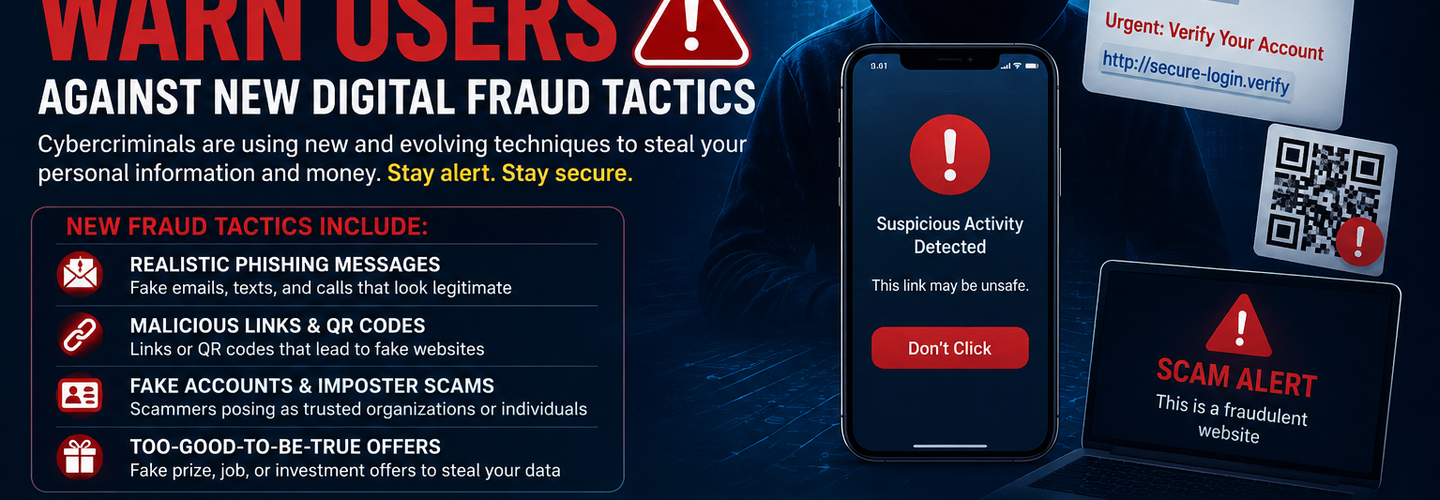
Cybersecurity Agencies Warn Users Against New Digital Fraud Tactics
## Rising Wave of Sophisticated Online Scams Targets Citizens and Businesses
Cybersecurity agencies across the globe are warning internet users about a sharp rise in advanced digital fraud tactics designed to steal money, personal information, and sensitive business data. As cybercriminals increasingly leverage artificial intelligence, fake websites, phishing campaigns, and social engineering tricks, both individuals and organizations are facing a growing cybersecurity threat landscape.
Experts say these fraud schemes are becoming more convincing and difficult to detect, especially as attackers imitate trusted institutions such as banks, government agencies, e-commerce platforms, and telecom providers.
For users, staying informed and practicing safe online behavior is now more important than ever.
## What Are the Latest Digital Fraud Tactics?
Cybersecurity investigators have identified several emerging fraud techniques currently being used by cybercriminals worldwide.
1. AI-Generated Voice and Video Scams
Fraudsters are now using artificial intelligence to create realistic voice clones and deepfake videos. Victims may receive calls that sound identical to a family member, employer, or bank representative requesting urgent money transfers or sensitive information.
These scams exploit trust and emotional panic to manipulate victims quickly.
2. Fake Banking and Payment Links
Attackers are sending fraudulent SMS messages, emails, and WhatsApp texts containing links that mimic legitimate banking or payment websites. Once users enter login credentials or OTPs, the data is instantly stolen.
Many fake websites now use HTTPS certificates and professional-looking designs, making them harder to identify.
3. QR Code Fraud
Cybercriminals are increasingly using malicious QR codes in advertisements, emails, parking systems, and fake payment requests. Scanning these codes can redirect users to phishing websites or trigger unauthorized payment transactions.
Experts advise users to verify payment details carefully before scanning unknown QR codes.
4. Remote Access App Scams
Fraudsters often pose as customer support executives and convince victims to install remote access applications on their smartphones or computers. Once installed, attackers gain control over devices and banking applications.
This tactic has become particularly common in tech support and online shopping scams.
5. Social Media Impersonation
Scammers are creating fake profiles of celebrities, companies, financial advisors, and even government officials to promote fraudulent investment schemes or cryptocurrency scams.
Victims are often lured with promises of guaranteed returns or fake giveaways.
## Why Digital Fraud Is Increasing
Cybersecurity analysts believe several factors are driving the rapid increase in online fraud:
- ▸Greater dependence on digital payments and online banking
- ▸Widespread use of social media platforms
- ▸Increased adoption of AI tools by cybercriminals
- ▸Lack of cybersecurity awareness among users
- ▸Large-scale data breaches exposing personal information
The rise of mobile-first internet usage has also expanded the attack surface for cybercriminals targeting smartphone users.
## Warning Signs of a Digital Fraud Attempt
Cybersecurity agencies advise users to watch for common red flags that may indicate fraud:
- ▸Urgent requests for money or sensitive information
- ▸Suspicious links sent via SMS, email, or messaging apps
- ▸Poor grammar or unusual wording in messages
- ▸Unknown QR codes requesting payment
- ▸Requests to install remote access software
- ▸Offers that appear “too good to be true”
- ▸Calls demanding OTPs, PINs, or banking credentials
Legitimate banks and government agencies generally do not ask users to share passwords or OTPs over phone calls or messages.
## How Users Can Protect Themselves
Cybersecurity experts recommend following these essential safety practices to reduce the risk of falling victim to digital fraud.
Enable Multi-Factor Authentication (MFA)
Using MFA adds an extra security layer to online accounts, making it harder for attackers to gain unauthorized access.
Verify Links Before Clicking
Always check website URLs carefully before entering login credentials or payment information. Avoid clicking links from unknown or suspicious sources.
Avoid Sharing OTPs and Passwords
Never share banking OTPs, passwords, UPI PINs, or personal financial details with anyone.
Keep Devices Updated
Install software and security updates regularly to protect devices from known vulnerabilities.
Use Trusted Applications Only
Download apps only from official app stores such as Google Play Store or Apple App Store.
Monitor Bank Transactions
Regularly review banking and payment transaction alerts to detect unauthorized activity early.
## Businesses Also Facing Growing Risks
Organizations are increasingly being targeted through phishing attacks, ransomware campaigns, fake invoices, and business email compromise (BEC) scams.
Cybersecurity agencies are urging companies to:
- ▸Conduct employee cybersecurity awareness training
- ▸Deploy advanced email filtering systems
- ▸Use endpoint detection and response (EDR) solutions
- ▸Backup critical data regularly
- ▸Implement zero-trust security policies
Small businesses remain especially vulnerable due to limited cybersecurity resources.
## Government and Cybersecurity Agencies Intensify Monitoring
Law enforcement agencies and national cybersecurity teams are expanding efforts to combat digital fraud through awareness campaigns, intelligence sharing, and stronger cybercrime reporting systems.
Several countries are also introducing stricter regulations for telecom providers, financial institutions, and digital platforms to improve fraud detection and consumer protection.
Authorities encourage victims to report cyber fraud incidents immediately to official cybercrime portals or local law enforcement agencies.
## The Growing Role of AI in Cybercrime
Artificial intelligence is transforming both cybersecurity defense and cybercrime operations. While security teams use AI to detect threats faster, attackers are using the same technology to automate phishing, create convincing fake content, and bypass traditional security checks.
Experts warn that AI-powered scams may continue evolving rapidly over the next few years, making digital awareness a critical part of online safety.
## Final Thoughts
The latest warnings from cybersecurity agencies highlight a critical reality: digital fraud is becoming more advanced, more targeted, and more difficult to detect.
Whether it is fake banking alerts, deepfake scams, malicious QR codes, or impersonation attacks, cybercriminals are constantly adapting their tactics to exploit trust and human error.
For users and businesses alike, cybersecurity awareness, cautious online behavior, and strong security practices remain the best defense against evolving digital fraud threats.
As online threats continue to grow, staying informed is no longer optional — it is essential for digital safety.
Read More:
Foxconn Cyberattack: Hackers Claim Apple & Google Data Stolen
Arctic Wolf Launches AI Mobile Threat Defense
The Mythos Stress Test: Are Indian Banks & Fintechs Ready for AI-Native Cyber Threats?
India Lost ₹52,000 Crore to Cyber Frauds in 5 Years – Govt Tightens Telecom Security
₹152 Crore Cyber Scam Exposed Across 14 States – How Mule Accounts Fueled Massive Fraud
First Public macOS Kernel Exploit on Apple M5 Developed Using Mythos Preview in Just Five Days
SEBI Creates AI Cyber Defense Task Force to Protect India’s Financial Markets
## Analyst Commentary & Implementation Blueprint
Security advisory
Continuous security exposure assessment is critical to identifying public vulnerabilities before they are exploited. Organizations should maintain a passive inventory of all web servers, TLS configs, and open ports, ensuring that default configurations are eliminated and security advisories are actively implemented.
Hardened Security Configuration Blueprint
# General Security Hardening Directive
ServerTokens ProductOnly
ServerSignature Off
FileETag None
Actionable Mitigation Checklist
- ✔Perform passive asset inventories weekly.
- ✔Restrict administrative ports using local firewall controls.
- ✔Monitor active CVE alerts for exposed software.
Common Inquiries & FAQs
Why is passive scanning preferred for continuous auditing?
Passive audits do not cause operational impact or trigger firewall blocks, making them ideal for constant surveillance of internet-facing assets.
What should I do if a vulnerability is flagged?
Apply the latest vendor patches, restrict access to the resource via firewalls, or verify configuration flags to mitigate risks.
Surendra Reddy
Surendra Reddy is a cybersecurity researcher and founder of ReconShield, specializing in OSINT and defensive infrastructure analysis.
Connect on LinkedIn ↗// AUDIT BRIEFING DISCUSSION (2 COMMENTS)
Great breakdown of the passive infrastructure vectors. We recently audited our external DNS zones and found multiple dangling staging environments. Implementing wildcard certificates reduced our CT log leaks significantly.
Is there any automated tooling you recommend for daily crt.sh scraping? Manually checking CT logs is becoming unsustainable for our domain portfolio.
// MORE ARTICLES

Security Researchers Warn Critical n8n Flaws May Expose Automation Platforms to RCE
Researchers have disclosed critical vulnerabilities in n8n that could expose automation workflows and connected enterprise systems to remote code execution risks, prompting urgent patch recommendations for users and administrators.

How Agentic AI Is Changing Software Engineering and Expanding Mobile Attack Surfaces
Agentic AI is rapidly transforming software engineering workflows through automation and intelligent coding assistance, while cybersecurity experts warn of expanding mobile attack surfaces and emerging application security risks.

Critical Tenda Router Backdoor (CVE-2026-11405): Check If Your Device Is Vulnerable Now
CVE-2026-11405 is an unpatched Tenda router backdoor granting full admin access without a password. Check if your model is affected now.