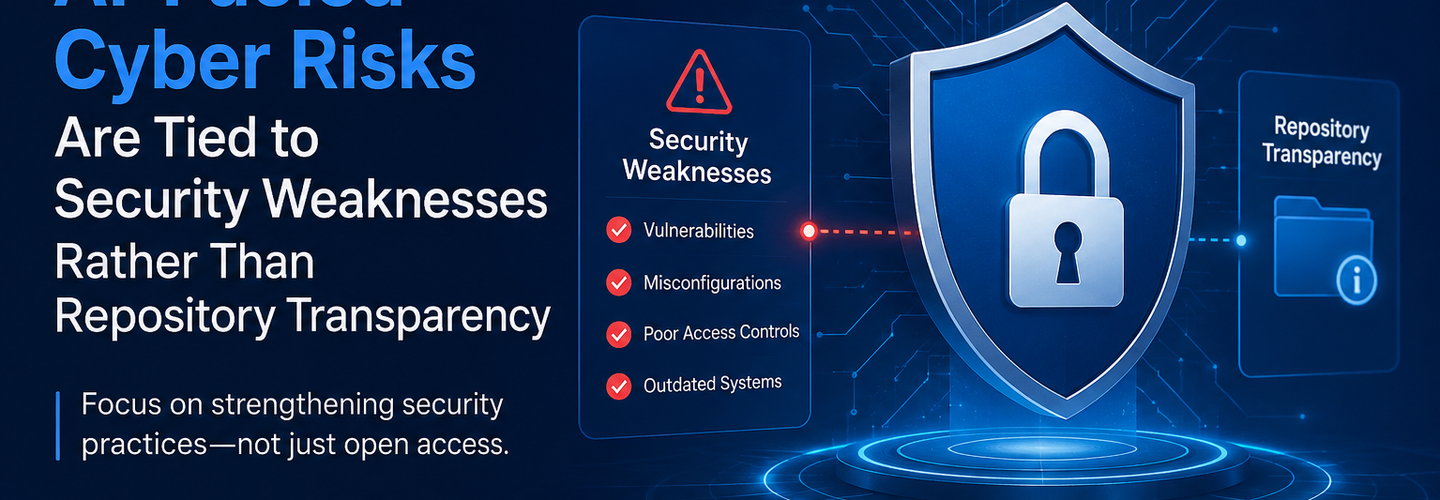
UK Says AI-Fueled Cyber Risks Are Tied to Security Weaknesses Rather Than Repository Transparency
Artificial intelligence is rapidly reshaping the cybersecurity landscape, but UK officials are cautioning organizations against focusing on the wrong threat narrative. According to recent guidance and public commentary from British cybersecurity authorities, the growing danger posed by AI-enhanced cyberattacks is less about the openness of AI repositories or model-sharing platforms and more about longstanding operational security failures that threat actors continue to exploit.
The warning arrives at a time when governments, enterprises, and security researchers are debating whether open-source AI ecosystems create disproportionate cyber risk. UK officials argue that insecure infrastructure, delayed patching cycles, weak identity controls, and poor cyber hygiene remain the primary factors enabling successful attacks — regardless of whether adversaries use publicly accessible AI tools or proprietary systems.
The message reflects a broader shift occurring within the cybersecurity industry: organizations are increasingly recognizing that AI is accelerating existing threats rather than inventing entirely new attack categories.
## AI Is Amplifying Existing Cybersecurity Weaknesses
Security experts in the UK have emphasized that AI systems can enhance the speed, scale, and automation of malicious activity, but they rarely become the root cause of compromise on their own. Instead, AI tools are often layered onto already familiar intrusion methods targeting vulnerable systems, exposed credentials, outdated software, and improperly secured cloud environments.
This distinction matters because many recent policy discussions have centered on restricting repository transparency or limiting public access to AI research models. British cyber authorities appear to be taking a more operational view, arguing that organizations would achieve far greater security improvements by strengthening defensive fundamentals.
Industry analysts note that many major cyber incidents over the past several years did not rely on sophisticated zero-day exploitation. Instead, attackers frequently succeeded by abusing unpatched systems, poorly configured remote access tools, exposed APIs, and weak authentication controls.
Artificial intelligence now allows threat actors to automate reconnaissance, accelerate phishing campaigns, improve social engineering content, and analyze stolen data faster than before. However, the underlying vulnerabilities being exploited are often the same weaknesses defenders have struggled with for years.
Security teams across Europe and North America are increasingly reporting that AI-assisted campaigns tend to target organizations with immature cybersecurity practices rather than highly hardened environments.
## Operational Weaknesses Remain the Real Risk Multiplier
Cybersecurity professionals say the UK’s position aligns with growing evidence from incident response investigations. Many breaches attributed to “AI-powered threats” ultimately trace back to operational failures inside organizations themselves.
Common weaknesses include:
- ▸Inconsistent vulnerability management
- ▸Poor asset visibility
- ▸Misconfigured cloud storage
- ▸Excessive user privileges
- ▸Lack of multifactor authentication
- ▸Delayed incident response processes
- ▸Inadequate employee security awareness training
When combined with AI-enabled automation, these weaknesses can significantly increase the speed at which attacks spread through enterprise environments.
For example, AI-generated phishing content has become more convincing and scalable, reducing grammatical errors and improving localization. Yet phishing still primarily succeeds because users lack sufficient security training or because organizations fail to deploy modern email authentication and detection controls.
Similarly, AI-assisted malware development has raised concerns among defenders, but most large-scale ransomware operations continue to exploit exposed remote services, stolen credentials, and unpatched systems.
This operational reality is shaping government messaging in the UK. Officials appear increasingly concerned that debates around repository openness could distract organizations from addressing urgent defensive priorities already within their control.
## The Debate Around Repository Transparency
The issue of repository transparency has become especially controversial following the rapid expansion of open-source AI development communities. Some policymakers and researchers worry that openly available models may lower the barrier for malicious cyber activity.
Others argue that transparency enables better security research, broader defensive innovation, and improved vulnerability discovery.
The UK’s emerging stance suggests that restricting transparency alone is unlikely to meaningfully reduce cyber risk if enterprises continue operating with weak security controls.
This perspective mirrors arguments increasingly heard across the cybersecurity industry. Open-source software ecosystems have long operated under similar debates, yet many experts contend that transparency often strengthens security through peer review, rapid bug identification, and collaborative remediation.
Security researchers also note that sophisticated threat actors already possess significant technical capability independent of public AI repositories. Nation-state groups and organized cybercriminal networks often develop or customize their own tooling regardless of public availability.
As a result, defenders may gain more practical benefit from focusing on resilience, detection engineering, and response readiness than attempting to limit access to AI technologies entirely.
## AI Is Changing Attack Velocity, Not Just Capability
One of the most important implications highlighted by UK cybersecurity experts is that AI is dramatically increasing attack velocity.
Threat actors can now process information, generate malicious content, and adapt campaigns at a pace that would have previously required far larger operational teams. This acceleration creates new pressure on defenders, particularly organizations with limited security staffing.
Security operations centers are already facing increased alert volumes, more sophisticated phishing lures, and faster exploitation timelines after vulnerability disclosure.
Several industry studies have shown that exploitation attempts often begin within hours of public vulnerability announcements. AI-assisted automation may continue shrinking this window further, forcing organizations to accelerate patch deployment and threat detection capabilities.
The UK’s warning effectively reframes the AI debate from one of “technology access” to one of “operational resilience.”
Organizations that already maintain strong security hygiene, rapid patch cycles, layered defenses, and mature monitoring systems are generally better positioned to withstand AI-enhanced threats.
Those with fragmented infrastructure and inconsistent security governance face significantly greater exposure.
## Industry Implications for Enterprises and Critical Infrastructure
The UK’s comments arrive amid growing concerns over AI-related risks to critical infrastructure sectors, including healthcare, energy, finance, telecommunications, and transportation.
Many of these industries operate complex legacy environments that were not designed to withstand modern automated threat activity.
Operational technology (OT) networks remain particularly vulnerable because patching industrial systems often involves downtime risks and regulatory constraints. AI-assisted reconnaissance and automated targeting could increase pressure on already overstretched security teams in these sectors.
Financial institutions are also facing escalating risks from AI-enhanced fraud campaigns and impersonation attempts. Deepfake audio and synthetic identity technologies are improving rapidly, creating new challenges for identity verification systems.
Meanwhile, software supply chain security remains under intense scrutiny as organizations increasingly integrate AI components into enterprise workflows.
Cybersecurity leaders warn that rapid AI adoption without sufficient governance may introduce additional attack surfaces, especially when organizations deploy third-party AI services without proper risk assessments.
The UK’s position may influence broader European cybersecurity policy discussions, particularly around balancing AI innovation with security oversight.
## Why This Matters
The significance of the UK’s warning extends beyond policy debates about AI openness.
For many organizations, the statement serves as a reminder that cybersecurity failures are still overwhelmingly tied to operational discipline rather than purely technological sophistication.
AI is undeniably changing the threat landscape, but it is also exposing which organizations have failed to modernize their defensive foundations.
This matters because many enterprises risk diverting resources toward hypothetical AI threats while neglecting high-impact security improvements that already reduce breach likelihood today.
Basic cybersecurity practices continue to deliver substantial risk reduction, including:
- ▸Enforcing multifactor authentication
- ▸Maintaining accurate asset inventories
- ▸Rapidly patching internet-facing systems
- ▸Conducting regular security awareness training
- ▸Monitoring privileged account activity
- ▸Implementing network segmentation
- ▸Strengthening backup and recovery procedures
Security leaders increasingly argue that AI should be viewed as a force multiplier — one that benefits both attackers and defenders depending on preparedness levels.
Organizations with mature detection and response programs may actually gain significant defensive advantages from AI-assisted monitoring, threat intelligence analysis, and automated remediation.
Those lacking cybersecurity maturity could face accelerating operational risk.
## How Users Can Stay Safe
Although much of the discussion focuses on enterprises and governments, individual users also face growing exposure to AI-enhanced cyber threats.
Cybersecurity experts recommend several practical defensive measures:
Use Multifactor Authentication Everywhere
Enabling MFA remains one of the most effective protections against account compromise, particularly for email, banking, and cloud services.
Verify Unexpected Communications
AI-generated phishing emails and impersonation attempts are becoming harder to identify visually. Users should independently verify unexpected requests involving payments, credentials, or sensitive information.
Keep Devices Updated
Routine software updates remain critical. Many attacks continue targeting known vulnerabilities for which patches already exist.
Limit Password Reuse
Credential stuffing attacks remain widespread. Password managers can help users maintain unique passwords across services.
Watch for Synthetic Media Manipulation
Deepfake audio and video impersonation attempts are becoming increasingly realistic. Users should confirm unusual requests through secondary communication channels.
Monitor Financial and Online Accounts
Early detection remains essential. Regularly reviewing account activity can help identify unauthorized access before larger damage occurs.
## Official Responses and Government Guidance
UK cybersecurity authorities have continued emphasizing resilience-focused strategies rather than purely restrictive AI controls.
Government agencies across Europe and North America are increasingly encouraging organizations to adopt:
- ▸Zero Trust architectures
- ▸Secure-by-design principles
- ▸Faster vulnerability remediation programs
- ▸Enhanced cloud security governance
- ▸AI risk management frameworks
- ▸Improved threat intelligence sharing
The broader cybersecurity industry has also responded by accelerating investments in AI-assisted defensive technologies.
Major security vendors are integrating machine learning into:
- ▸Threat detection systems
- ▸Behavioral analytics platforms
- ▸Identity protection tools
- ▸Fraud prevention technologies
- ▸Automated incident response workflows
At the same time, regulators are examining how organizations deploy AI responsibly without undermining transparency, innovation, or collaborative security research.
The debate is likely to intensify as AI capabilities continue evolving.
## Sources & References
- ▸Microsoft Digital Defense Report
## Conclusion
The UK’s assessment of AI-driven cyber risk reflects an increasingly pragmatic reality within modern cybersecurity: artificial intelligence is accelerating existing threats far more than it is creating entirely new ones.
While debates around repository transparency and AI openness will continue, many security professionals believe the more urgent challenge lies in strengthening operational resilience. Poor patch management, weak authentication, inadequate visibility, and inconsistent security governance remain the conditions that allow attacks to succeed at scale.
AI may increase the speed and sophistication of cyber operations, but organizations that prioritize foundational security controls, rapid remediation, and proactive defense strategies are likely to remain significantly better protected in the evolving threat landscape.
## Analyst Commentary & Implementation Blueprint
Security advisory
Continuous security exposure assessment is critical to identifying public vulnerabilities before they are exploited. Organizations should maintain a passive inventory of all web servers, TLS configs, and open ports, ensuring that default configurations are eliminated and security advisories are actively implemented.
Hardened Security Configuration Blueprint
# General Security Hardening Directive
ServerTokens ProductOnly
ServerSignature Off
FileETag None
Actionable Mitigation Checklist
- ✔Perform passive asset inventories weekly.
- ✔Restrict administrative ports using local firewall controls.
- ✔Monitor active CVE alerts for exposed software.
Common Inquiries & FAQs
Why is passive scanning preferred for continuous auditing?
Passive audits do not cause operational impact or trigger firewall blocks, making them ideal for constant surveillance of internet-facing assets.
What should I do if a vulnerability is flagged?
Apply the latest vendor patches, restrict access to the resource via firewalls, or verify configuration flags to mitigate risks.
Surendra Reddy
Surendra Reddy is a cybersecurity researcher and founder of ReconShield, specializing in OSINT and defensive infrastructure analysis.
Connect on LinkedIn ↗// AUDIT BRIEFING DISCUSSION (2 COMMENTS)
Great breakdown of the passive infrastructure vectors. We recently audited our external DNS zones and found multiple dangling staging environments. Implementing wildcard certificates reduced our CT log leaks significantly.
Is there any automated tooling you recommend for daily crt.sh scraping? Manually checking CT logs is becoming unsustainable for our domain portfolio.
// MORE ARTICLES
Security Researchers Warn Critical n8n Flaws May Expose Automation Platforms to RCE
Researchers have disclosed critical vulnerabilities in n8n that could expose automation workflows and connected enterprise systems to remote code execution risks, prompting urgent patch recommendations for users and administrators.
How Agentic AI Is Changing Software Engineering and Expanding Mobile Attack Surfaces
Agentic AI is rapidly transforming software engineering workflows through automation and intelligent coding assistance, while cybersecurity experts warn of expanding mobile attack surfaces and emerging application security risks.

Critical Tenda Router Backdoor (CVE-2026-11405): Check If Your Device Is Vulnerable Now
CVE-2026-11405 is an unpatched Tenda router backdoor granting full admin access without a password. Check if your model is affected now.