
Critical NGINX Vulnerability Under Active Exploitation, Security Teams Urged to Patch Immediately
A newly disclosed remote code execution (RCE) vulnerability affecting widely deployed NGINX environments is now being actively exploited by threat actors, prompting urgent warnings from cybersecurity researchers and infrastructure security teams worldwide. Security analysts say the flaw poses a significant risk to enterprises running internet-facing services, particularly organizations relying on reverse proxies, API gateways, cloud-native workloads, and web application delivery systems built around NGINX.
The issue has quickly escalated from a routine vulnerability disclosure into a high-priority incident response concern after multiple security firms observed exploitation attempts targeting exposed systems within hours of public disclosure. Researchers warn that the flaw could allow unauthorized code execution under specific conditions, potentially enabling attackers to disrupt services, compromise backend infrastructure, or establish persistence within vulnerable environments.
NGINX remains one of the most widely used web server and reverse proxy technologies globally, powering a substantial portion of modern web infrastructure. Because of its extensive use in cloud platforms, Kubernetes environments, SaaS applications, and enterprise networks, any critical vulnerability affecting the software carries broad operational and security implications.
## Threat Overview
Security researchers tracking the campaign say attackers are aggressively scanning the internet for vulnerable NGINX deployments. The activity appears to include opportunistic exploitation attempts against exposed servers as well as more targeted probing of enterprise infrastructure.
Several incident response teams reported seeing abnormal requests associated with exploitation behavior shortly after technical details about the vulnerability became public. While attribution remains unclear, analysts believe multiple threat groups may already be leveraging the flaw due to the speed and scale of scanning activity observed globally.
The vulnerability is classified as a remote code execution issue, one of the most severe categories of software flaws because it can enable attackers to execute malicious commands remotely without requiring direct system access. Depending on deployment configurations, successful exploitation could potentially impact confidentiality, integrity, and availability across affected systems.
Cybersecurity experts note that internet-facing infrastructure components such as reverse proxies and load balancers are especially attractive targets because they often sit at the boundary between external traffic and internal enterprise services.
“Edge infrastructure remains one of the most valuable targets for threat actors because compromise at that layer can create visibility into backend applications and authentication flows,” one threat intelligence analyst noted in an industry advisory issued following the disclosure.
Although not every NGINX deployment may be vulnerable, organizations using outdated versions, custom modules, or improperly segmented infrastructure could face elevated risk exposure.
## Technical Impact Analysis
The technical severity of the vulnerability stems from the role NGINX plays in modern application delivery pipelines. In many organizations, NGINX functions as a central traffic management layer that handles TLS termination, API routing, caching, authentication forwarding, and load balancing.
A compromise affecting this layer can have cascading operational consequences.
Security teams warn that successful exploitation may enable attackers to:
- ▸Disrupt application availability
- ▸Interfere with authentication workflows
- ▸Access sensitive traffic metadata
- ▸Manipulate requests sent to backend services
- ▸Establish footholds for lateral movement
- ▸Deploy secondary payloads
- ▸Target cloud-hosted workloads
Researchers also stress that cloud-native environments may face increased exposure because NGINX is deeply integrated into containerized and Kubernetes-based infrastructures. In many enterprise deployments, NGINX ingress controllers handle traffic routing for critical applications and APIs.
If attackers gain access to those components, the blast radius could extend beyond a single server.
Large-scale exploitation campaigns involving edge infrastructure are not uncommon. Over the past several years, attackers have repeatedly targeted internet-facing technologies including VPN appliances, web servers, application delivery controllers, and email gateways because of their privileged position inside enterprise networks.
What makes this incident particularly concerning is the speed of weaponization. Analysts say threat actors appear to have operationalized scanning activity almost immediately after disclosure, a pattern increasingly common in today’s threat landscape.
According to industry telemetry shared by multiple security vendors, exploitation attempts have already been observed against organizations in sectors including:
- ▸Financial services
- ▸Healthcare
- ▸Telecommunications
- ▸E-commerce
- ▸Government
- ▸Cloud hosting
- ▸Managed service providers
Because NGINX deployments are often publicly accessible, attackers can identify potential targets relatively quickly using automated reconnaissance tools.
## Industry Implications
The broader cybersecurity implications extend far beyond a single software vulnerability. The incident highlights ongoing concerns surrounding the security of foundational internet infrastructure and the shrinking window organizations have to respond to critical vulnerabilities.
Cybersecurity leaders have repeatedly warned that the time between vulnerability disclosure and active exploitation has dramatically decreased. In many cases, organizations now face exploitation attempts within hours rather than days or weeks.
This accelerated threat cycle creates significant pressure on security operations and infrastructure teams.
Enterprises managing hybrid cloud environments may face additional challenges because vulnerable NGINX instances can exist across:
- ▸On-premises data centers
- ▸Multi-cloud deployments
- ▸Development environments
- ▸Legacy infrastructure
- ▸Third-party hosted services
- ▸Container orchestration platforms
Shadow IT and unmanaged infrastructure further complicate remediation efforts. Security teams frequently discover forgotten or undocumented systems after active exploitation campaigns begin.
Managed service providers and hosting companies may also face elevated operational risks because a single vulnerable platform can affect multiple downstream customers simultaneously.
The incident is also likely to renew scrutiny around patch management maturity and exposure monitoring practices. Organizations that lack comprehensive asset visibility often struggle to identify all affected systems during high-severity vulnerability events.
Cyber insurance providers and regulatory agencies have increasingly emphasized rapid remediation requirements for internet-facing vulnerabilities, particularly those involving remote code execution.
Security experts say this trend is expected to continue as critical infrastructure threats evolve.
## Why This Matters
The active exploitation of a critical NGINX vulnerability matters because of the software’s enormous footprint across the modern internet.
NGINX is deeply embedded in enterprise infrastructure worldwide. It supports high-traffic applications, financial platforms, healthcare systems, APIs, cloud workloads, and government services. A serious vulnerability affecting such a widely deployed technology can quickly become a global cybersecurity event.
The incident also reflects a broader shift in attacker behavior.
Threat actors increasingly prioritize vulnerabilities affecting infrastructure technologies because those systems often provide broader access opportunities than individual endpoints. Instead of targeting a single workstation, attackers focus on technologies that sit in front of entire application ecosystems.
For defenders, this means internet-facing infrastructure requires continuous monitoring, rapid patching, and stronger segmentation controls.
The situation further demonstrates why vulnerability management can no longer function as a periodic compliance exercise. Organizations now need near real-time awareness of exposed assets and active threat intelligence integration.
Security teams are also under growing pressure from regulators, customers, and cyber insurers to demonstrate resilience against fast-moving threats.
Failure to patch critical internet-facing systems promptly can lead to operational disruption, reputational damage, regulatory scrutiny, and financial losses.
## How Users Can Stay Safe
Cybersecurity experts urge organizations using NGINX to take immediate defensive actions.
1. Apply Vendor Patches Immediately
Organizations should review official NGINX security advisories and update affected systems as soon as patches or mitigations become available. High-severity internet-facing vulnerabilities should receive emergency prioritization.
Delaying remediation significantly increases exposure risk once active exploitation begins.
2. Conduct Comprehensive Asset Discovery
Security teams should identify all NGINX deployments across environments, including:
- ▸Internet-facing servers
- ▸Cloud workloads
- ▸Kubernetes ingress controllers
- ▸Development environments
- ▸Disaster recovery systems
- ▸Third-party hosted assets
Unmanaged or forgotten systems often become the weakest link during exploitation campaigns.
3. Monitor for Suspicious Activity
Organizations should increase logging and monitoring around NGINX environments and review:
- ▸Unexpected requests
- ▸Traffic anomalies
- ▸Unauthorized configuration changes
- ▸Privilege escalation attempts
- ▸Abnormal process activity
- ▸Unusual outbound communications
Security operations centers should also review indicators of compromise provided by trusted vendors and threat intelligence sources.
4. Restrict Administrative Access
Administrative interfaces and management systems should not be exposed publicly unless absolutely necessary. Implement:
- ▸Multi-factor authentication
- ▸IP allowlisting
- ▸Network segmentation
- ▸Zero-trust access controls
Reducing exposure limits the attack surface available to threat actors.
5. Strengthen Web Application Protections
Web application firewalls (WAFs), intrusion detection systems, and behavioral monitoring tools may help detect or block suspicious traffic patterns associated with exploitation attempts.
While these controls are not substitutes for patching, they can provide additional defensive visibility.
6. Prepare Incident Response Procedures
Organizations should validate backup integrity, review incident response workflows, and ensure security teams can quickly isolate affected systems if compromise occurs.
Rapid containment can significantly reduce operational damage during active attacks.
## Official Responses
Security vendors, infrastructure providers, and incident response teams have issued multiple advisories regarding the vulnerability and associated exploitation activity.
Several cloud and hosting providers have begun notifying customers about exposed NGINX deployments and recommending immediate updates. Cybersecurity agencies and industry response groups are also tracking exploitation attempts and sharing defensive guidance.
Enterprise security vendors have updated detection signatures and monitoring capabilities to help organizations identify suspicious activity linked to the flaw.
Meanwhile, cybersecurity researchers continue analyzing exploitation behavior observed in the wild. Analysts expect additional scanning and opportunistic attacks to continue as long as vulnerable systems remain exposed online.
Infrastructure security experts stress that organizations should not assume smaller environments are immune.
Historically, mass exploitation campaigns targeting edge infrastructure frequently affect organizations of all sizes because automated scanning tools indiscriminately probe internet-facing systems.
## Sources & References
- ▸Official NGINX security advisories
- ▸Threat intelligence reporting from enterprise cybersecurity vendors
- ▸Incident response observations from managed security providers
- ▸Infrastructure security analysis from cloud security researchers
- ▸Public advisories from cybersecurity agencies and CERT organizations
- ▸Industry telemetry regarding exploitation activity targeting internet-facing infrastructure
## Conclusion
The active exploitation of a critical NGINX remote code execution vulnerability underscores the growing risks surrounding internet-facing infrastructure and the rapidly accelerating pace of modern cyber threats.
As organizations continue adopting cloud-native architectures and API-driven ecosystems, technologies like NGINX increasingly serve as critical gateways between public networks and internal services. That visibility and strategic importance make them high-value targets for attackers.
Security teams now face an environment where critical vulnerabilities can transition from disclosure to widespread exploitation within hours. In this landscape, effective defense depends on rapid patch management, strong visibility into exposed assets, continuous monitoring, and layered security controls.
For organizations running NGINX in production environments, the priority is clear: identify vulnerable systems, apply mitigations immediately, and maintain heightened monitoring until the threat activity subsides.
The longer exposed systems remain unpatched, the greater the likelihood that attackers will attempt to exploit them.
Read More:
₹152 Crore Cyber Scam Exposed Across 14 States – How Mule Accounts Fueled Massive Fraud
First Public macOS Kernel Exploit on Apple M5 Developed Using Mythos Preview in Just Five Days
SEBI Creates AI Cyber Defense Task Force to Protect India’s Financial Markets
Cybersecurity Agencies Warn Users Against New Digital Fraud Tactics
CISA Warns of Active Exploitation of Microsoft Exchange Server Spoofing Vulnerability
## Analyst Commentary & Implementation Blueprint
Security advisory
Continuous security exposure assessment is critical to identifying public vulnerabilities before they are exploited. Organizations should maintain a passive inventory of all web servers, TLS configs, and open ports, ensuring that default configurations are eliminated and security advisories are actively implemented.
Hardened Security Configuration Blueprint
# General Security Hardening Directive
ServerTokens ProductOnly
ServerSignature Off
FileETag None
Actionable Mitigation Checklist
- ✔Perform passive asset inventories weekly.
- ✔Restrict administrative ports using local firewall controls.
- ✔Monitor active CVE alerts for exposed software.
Common Inquiries & FAQs
Why is passive scanning preferred for continuous auditing?
Passive audits do not cause operational impact or trigger firewall blocks, making them ideal for constant surveillance of internet-facing assets.
What should I do if a vulnerability is flagged?
Apply the latest vendor patches, restrict access to the resource via firewalls, or verify configuration flags to mitigate risks.
Surendra Reddy
Surendra Reddy is a cybersecurity researcher and founder of ReconShield, specializing in OSINT and defensive infrastructure analysis.
Connect on LinkedIn ↗// AUDIT BRIEFING DISCUSSION (2 COMMENTS)
Great breakdown of the passive infrastructure vectors. We recently audited our external DNS zones and found multiple dangling staging environments. Implementing wildcard certificates reduced our CT log leaks significantly.
Is there any automated tooling you recommend for daily crt.sh scraping? Manually checking CT logs is becoming unsustainable for our domain portfolio.
// MORE ARTICLES
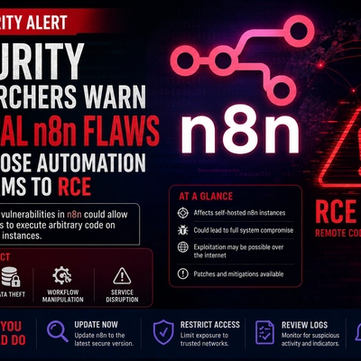
Security Researchers Warn Critical n8n Flaws May Expose Automation Platforms to RCE
Researchers have disclosed critical vulnerabilities in n8n that could expose automation workflows and connected enterprise systems to remote code execution risks, prompting urgent patch recommendations for users and administrators.

How Agentic AI Is Changing Software Engineering and Expanding Mobile Attack Surfaces
Agentic AI is rapidly transforming software engineering workflows through automation and intelligent coding assistance, while cybersecurity experts warn of expanding mobile attack surfaces and emerging application security risks.

Critical Tenda Router Backdoor (CVE-2026-11405): Check If Your Device Is Vulnerable Now
CVE-2026-11405 is an unpatched Tenda router backdoor granting full admin access without a password. Check if your model is affected now.