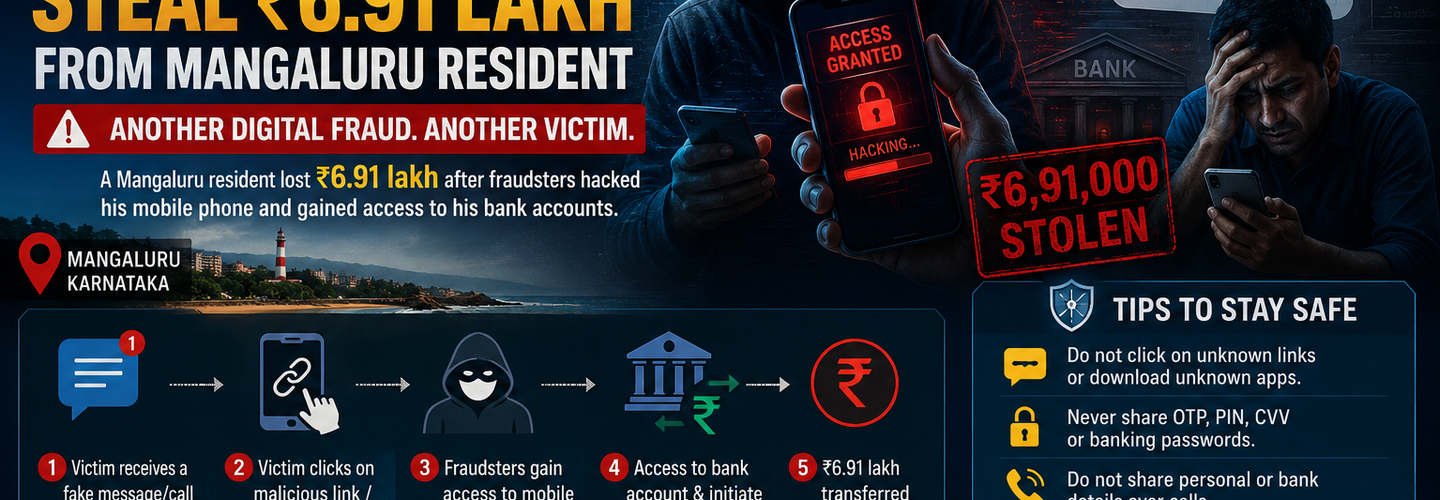
Fraudsters Hack Mobile Phone, Steal ₹6.91 Lakh From Mangaluru Resident
Fraudsters have once again exposed the growing risks associated with mobile banking and digital payments after a Mangaluru resident reportedly lost ₹6.91 lakh in a sophisticated cyber fraud incident involving unauthorized access to a mobile phone and banking services.
The incident highlights how cybercriminals are increasingly targeting smartphones as gateways to financial accounts, personal data, and digital identities. As India’s digital banking ecosystem continues to expand rapidly through UPI, mobile wallets, and internet banking platforms, cyber fraud cases involving compromised devices are becoming more frequent and more damaging.
According to local reports, the victim discovered unauthorized transactions after fraudsters allegedly gained control of the mobile device and accessed linked financial accounts. Authorities have launched an investigation into the incident.
## How Mobile Banking Frauds Are Evolving
Cybercriminals are no longer relying only on traditional phishing emails or fake calls. Modern fraud campaigns increasingly combine:
- ▸malicious mobile applications
- ▸fake customer support scams
- ▸SIM swap attacks
- ▸spyware infections
- ▸social engineering
- ▸remote device access tricks
Once attackers gain access to a victim’s smartphone, they may attempt to:
- ▸intercept OTPs
- ▸access banking apps
- ▸hijack UPI services
- ▸steal saved credentials
- ▸authorize fraudulent transactions
Security experts warn that smartphones have effectively become “digital wallets,” making them one of the most valuable targets for cybercriminals.
## Why Mobile Devices Are Prime Targets
India’s digital payment ecosystem has witnessed explosive growth over the past few years due to:
- ▸UPI adoption
- ▸mobile-first banking
- ▸fintech applications
- ▸instant payment systems
- ▸Aadhaar-linked services
While this transformation has improved financial accessibility, it has also increased the attack surface available to fraudsters.
Many users:
- ▸reuse passwords
- ▸install unverified apps
- ▸ignore software updates
- ▸grant excessive permissions
- ▸fall victim to social engineering
Cybercriminals exploit these weaknesses to gain unauthorized access to devices and financial services.
## Common Techniques Used in Mobile Banking Frauds
1. Fake Banking Applications
Attackers distribute malicious applications disguised as:
- ▸banking apps
- ▸loan services
- ▸investment tools
- ▸KYC verification software
These apps may steal credentials or secretly monitor device activity.
2. Remote Access Scams
Victims are tricked into installing remote access applications under the pretext of:
- ▸customer support
- ▸KYC updates
- ▸technical assistance
Once installed, attackers can observe or control the device remotely.
3. SIM Swap Attacks
Fraudsters may attempt to duplicate or hijack a victim’s SIM card to intercept:
- ▸OTPs
- ▸verification calls
- ▸banking alerts
This technique can bypass some authentication mechanisms.
4. Phishing & Social Engineering
Cybercriminals frequently impersonate:
- ▸banks
- ▸telecom providers
- ▸government agencies
- ▸fintech support teams
Victims are pressured into sharing:
- ▸OTPs
- ▸PINs
- ▸login credentials
- ▸UPI authorization requests
## Rising Cyber Fraud Concerns in India
Cyber fraud complaints involving:
- ▸UPI scams
- ▸investment fraud
- ▸mobile banking attacks
- ▸fake loan apps
have surged across India in recent years.
Authorities and cybersecurity experts continue urging users to remain cautious while using:
- ▸online banking services
- ▸digital payment platforms
- ▸third-party applications
The increasing sophistication of cybercriminal operations means even experienced users can become targets if proper security practices are not followed.
## Why This Incident Matters
The Mangaluru case demonstrates how a compromised smartphone can quickly lead to severe financial losses.
Modern smartphones often contain:
- ▸banking applications
- ▸payment wallets
- ▸saved passwords
- ▸identity documents
- ▸personal communications
A single successful compromise may expose multiple financial services simultaneously.
For financial institutions and fintech providers, incidents like this also raise broader concerns regarding:
- ▸mobile banking security
- ▸user awareness
- ▸fraud detection systems
- ▸digital identity protection
As cybercriminals adopt more advanced tactics, organizations may need to strengthen:
- ▸anomaly detection
- ▸transaction monitoring
- ▸device intelligence
- ▸behavioral analytics
## How Users Can Stay Safe
Cybersecurity professionals recommend the following precautions to reduce the risk of mobile banking fraud:
- ▸Install apps only from official app stores
- ▸Avoid sharing OTPs or PINs with anyone
- ▸Never install remote access apps at the request of unknown callers
- ▸Enable multi-factor authentication wherever possible
- ▸Regularly update smartphone software and banking apps
- ▸Monitor bank statements and transaction alerts frequently
- ▸Use strong and unique passwords for financial applications
- ▸Disable app permissions that are not necessary
- ▸Avoid clicking suspicious links received via SMS or messaging apps
- ▸Contact official bank support directly when in doubt
## The Growing Need for Mobile Cybersecurity Awareness
As India becomes increasingly dependent on digital financial services, cybersecurity awareness is becoming just as important as financial literacy.
Experts warn that cyber fraud is evolving faster than many users realize. Attackers are leveraging:
- ▸automation
- ▸AI-assisted scams
- ▸advanced social engineering
- ▸malicious mobile software
to target individuals at scale.
Public awareness, stronger cybersecurity practices, and faster fraud response mechanisms will play a critical role in reducing financial cybercrime across the country.
## Conclusion
The ₹6.91 lakh fraud reported in Mangaluru serves as another reminder that smartphones are now central to modern financial life — and therefore highly attractive targets for cybercriminals.
As mobile banking adoption continues to grow, both users and financial institutions must strengthen their cybersecurity posture to defend against increasingly sophisticated fraud campaigns.
In the evolving digital economy, protecting financial accounts now begins with securing the mobile device itself.
Read More:
PHP SOAP Vulnerabilities Enable Remote Code Execution
Google Reports North Korean Hackers Using AI to Target Cybersecurity Blind Spots
UK Cybercrime Reform Protects Ethical Hackers
Foxconn Cyberattack: Hackers Claim Apple & Google Data Stolen
Arctic Wolf Launches AI Mobile Threat Defense
The Mythos Stress Test: Are Indian Banks & Fintechs Ready for AI-Native Cyber Threats?
## Analyst Commentary & Implementation Blueprint
Security advisory
Continuous security exposure assessment is critical to identifying public vulnerabilities before they are exploited. Organizations should maintain a passive inventory of all web servers, TLS configs, and open ports, ensuring that default configurations are eliminated and security advisories are actively implemented.
Hardened Security Configuration Blueprint
# General Security Hardening Directive
ServerTokens ProductOnly
ServerSignature Off
FileETag None
Actionable Mitigation Checklist
- ✔Perform passive asset inventories weekly.
- ✔Restrict administrative ports using local firewall controls.
- ✔Monitor active CVE alerts for exposed software.
Common Inquiries & FAQs
Why is passive scanning preferred for continuous auditing?
Passive audits do not cause operational impact or trigger firewall blocks, making them ideal for constant surveillance of internet-facing assets.
What should I do if a vulnerability is flagged?
Apply the latest vendor patches, restrict access to the resource via firewalls, or verify configuration flags to mitigate risks.
Surendra Reddy
Surendra Reddy is a cybersecurity researcher and founder of ReconShield, specializing in OSINT and defensive infrastructure analysis.
Connect on LinkedIn ↗// AUDIT BRIEFING DISCUSSION (2 COMMENTS)
Great breakdown of the passive infrastructure vectors. We recently audited our external DNS zones and found multiple dangling staging environments. Implementing wildcard certificates reduced our CT log leaks significantly.
Is there any automated tooling you recommend for daily crt.sh scraping? Manually checking CT logs is becoming unsustainable for our domain portfolio.
// MORE ARTICLES
Security Researchers Warn Critical n8n Flaws May Expose Automation Platforms to RCE
Researchers have disclosed critical vulnerabilities in n8n that could expose automation workflows and connected enterprise systems to remote code execution risks, prompting urgent patch recommendations for users and administrators.

How Agentic AI Is Changing Software Engineering and Expanding Mobile Attack Surfaces
Agentic AI is rapidly transforming software engineering workflows through automation and intelligent coding assistance, while cybersecurity experts warn of expanding mobile attack surfaces and emerging application security risks.

₹250 Crore Cyber Scam Busted: Gujarat Police Arrest 19, Including MBA Student
Gujarat Police bust a ₹250 crore cyber fraud network, arresting 19 including an MBA student. Here's how the mule account scam worked.