
Cybercrime Network Exposed: Telangana Man Held Over Mule Account Operations
Indian law enforcement agencies have intensified their crackdown on financial cybercrime networks following the arrest of a Telangana-based individual allegedly linked to a large-scale mule bank account operation used to facilitate online fraud activities.
Investigators say the suspect is believed to have played a role in supplying or managing bank accounts allegedly used to move illicit funds connected to multiple cyber fraud schemes. The case highlights a growing concern among cybersecurity experts and financial crime investigators: mule account networks are rapidly becoming the backbone of modern digital fraud ecosystems.
Authorities across India have repeatedly warned that cybercriminal syndicates increasingly rely on seemingly legitimate bank accounts to obscure money trails, distribute stolen funds, and complicate law enforcement investigations. The latest arrest underscores how organized financial cybercrime operations are evolving beyond isolated scams into structured underground networks with regional, national, and even international links.
The investigation also reflects broader concerns over the industrialization of cyber-enabled financial fraud, particularly as India’s digital payment infrastructure continues expanding at unprecedented speed.
## Threat Overview
According to investigators familiar with the case, authorities uncovered evidence suggesting that multiple bank accounts may have been used to receive or transfer funds connected to suspected cyber fraud operations. While the full scope of the network remains under investigation, officials indicated that the operation may involve coordination between account suppliers, intermediaries, and fraud operators.
Mule accounts are bank accounts used to move or temporarily store funds linked to unauthorized or deceptive financial activities. In many cybercrime investigations, such accounts are used to complicate tracing efforts and reduce the visibility of illicit transactions.
Cybersecurity analysts note that the rapid growth of digital banking, mobile payment platforms, and instant transfer systems has significantly expanded the attack surface for financial cybercrime networks.
India’s booming digital payments sector has transformed consumer convenience, but it has also attracted increasingly sophisticated fraud operations targeting individuals, small businesses, and financial institutions. According to Reserve Bank of India (RBI) data and multiple cybersecurity reports, online banking fraud, phishing incidents, and payment-related scams have continued rising in recent years.
Threat intelligence researchers say mule account ecosystems are now deeply embedded within broader cybercrime supply chains. Rather than operating independently, these networks often support a wide range of illicit activities, including:
- ▸Online financial fraud
- ▸Social engineering scams
- ▸Investment fraud schemes
- ▸Identity-related fraud
- ▸Unauthorized payment transfers
- ▸Cross-border money laundering operations
The Telangana case has renewed attention on how regional cybercrime networks are increasingly intersecting with organized financial fraud infrastructure.
## Technical Impact Analysis
From a cybersecurity perspective, mule account operations represent a critical financial enablement layer that allows cybercriminal ecosystems to scale rapidly.
Modern fraud campaigns rarely depend solely on technical compromise. Instead, attackers frequently combine:
- ▸Social engineering tactics
- ▸Stolen credentials
- ▸Fraudulent transactions
- ▸Layered fund transfers
- ▸Temporary banking channels
Security experts explain that mule accounts reduce friction for cybercriminals attempting to move stolen funds quickly before detection systems or law enforcement agencies can intervene.
Financial institutions face growing challenges identifying suspicious transaction patterns because mule account operators often use:
- ▸Newly opened accounts
- ▸Accounts linked to compromised identities
- ▸Accounts controlled through intermediaries
- ▸High-frequency small-value transfers
- ▸Multi-bank transaction chains
Banks and payment processors increasingly rely on artificial intelligence and behavioral analytics to identify anomalies associated with financial fraud networks. However, cybercriminal groups continue adapting their methods to evade automated detection systems.
Cybersecurity firms monitoring financial crime activity have also observed an increase in recruitment attempts targeting students, unemployed individuals, and financially vulnerable populations who may unknowingly participate in illicit fund movement schemes.
Experts warn that some individuals are lured through fake job offers, commission-based payment promises, or deceptive financial arrangements without fully understanding the legal and financial consequences.
In many investigations, mule accounts become the critical link connecting fraudulent transactions to broader criminal infrastructure.
The challenge for investigators is compounded by the speed of modern digital payments. Real-time transfer systems can move funds across multiple accounts within minutes, narrowing the response window for fraud prevention teams.
Security professionals also emphasize that mule account operations are no longer isolated domestic problems. Many cyber-enabled financial fraud networks operate across jurisdictions, requiring coordination between:
- ▸Local law enforcement agencies
- ▸National cybercrime units
- ▸Financial intelligence agencies
- ▸International banking regulators
- ▸Digital payment providers
The globalization of cyber-enabled financial crime has significantly increased pressure on both governments and private-sector financial institutions.
## Industry Implications
The Telangana case arrives at a time when India’s digital economy is experiencing explosive growth. Unified Payments Interface (UPI) transactions continue reaching record highs, while online banking adoption expands across urban and rural regions alike.
This rapid digital transformation has created immense economic opportunities, but it has also elevated cybersecurity risks for:
- ▸Banks
- ▸Fintech companies
- ▸Payment processors
- ▸E-commerce platforms
- ▸Consumers
- ▸Government agencies
Financial crime investigators warn that mule account operations can undermine trust in digital payment ecosystems if not aggressively addressed.
Banks are now investing heavily in:
- ▸Fraud analytics platforms
- ▸Transaction monitoring systems
- ▸AI-driven anomaly detection
- ▸Identity verification technologies
- ▸Behavioral risk assessment tools
However, experts say technology alone is insufficient.
Cybercrime prevention increasingly depends on collaboration between:
- ▸Financial institutions
- ▸Telecom providers
- ▸Cybercrime investigators
- ▸Regulatory agencies
- ▸Threat intelligence firms
India’s cybersecurity and financial sectors are also facing growing regulatory expectations related to fraud prevention, customer due diligence, and suspicious transaction reporting.
The RBI and cybersecurity agencies have repeatedly urged institutions to strengthen anti-fraud monitoring capabilities amid rising cyber-enabled financial crime incidents.
Meanwhile, cybersecurity professionals caution that cybercriminals continue adapting rapidly to new security controls. Fraud networks increasingly exploit:
- ▸Stolen identity information
- ▸SIM swap incidents
- ▸Fake customer verification processes
- ▸Social engineering campaigns
- ▸Credential compromise events
The expansion of digital financial services has effectively transformed financial cybersecurity into a national economic security issue.
## Why This Matters
The significance of mule account operations extends far beyond isolated financial fraud cases.
These networks often function as the operational infrastructure supporting broader cybercrime ecosystems. Without access to reliable channels for moving illicit funds, many forms of online fraud become substantially more difficult to sustain at scale.
That reality makes mule account operators a major focus for law enforcement agencies worldwide.
The Telangana investigation also reflects a larger shift in how cybercrime is organized. Modern cyber-enabled fraud increasingly resembles structured business operations involving specialized roles, decentralized coordination, and financial logistics support.
Cybersecurity analysts warn that financial cybercrime is becoming more professionalized, with some criminal networks operating sophisticated recruitment pipelines and layered operational models.
For ordinary citizens, the risks are equally significant.
Unauthorized transactions, identity misuse, phishing scams, and payment fraud can result in:
- ▸Financial losses
- ▸Credit damage
- ▸Emotional stress
- ▸Legal complications
- ▸Long-term identity exposure
Small businesses are particularly vulnerable because many lack advanced fraud detection capabilities or dedicated cybersecurity resources.
The issue also affects public confidence in digital financial systems. As digital payments become central to economic activity, maintaining trust in online transactions is essential for long-term financial ecosystem stability.
Experts emphasize that cybersecurity awareness must evolve alongside technological adoption.
## How Users Can Stay Safe
Cybersecurity professionals and banking authorities recommend several measures to reduce exposure to financial fraud risks.
Never Share Banking Credentials
Users should never disclose:
- ▸OTPs
- ▸UPI PINs
- ▸Banking passwords
- ▸Debit card CVVs
- ▸Authentication codes
Legitimate banks and government agencies do not request sensitive credentials through unsolicited calls or messages.
Monitor Account Activity Regularly
Consumers should review bank statements and transaction histories frequently to identify suspicious activity early.
Instant transaction alerts can help users detect unauthorized transfers quickly.
Be Cautious of Job Offers Involving Bank Accounts
Fraud investigators warn that cybercriminals sometimes recruit individuals by offering commissions for allowing temporary use of bank accounts.
Users should avoid any arrangement involving third-party fund transfers through personal accounts.
Enable Multi-Factor Authentication
Banks and financial platforms increasingly support multi-factor authentication (MFA), which adds additional protection against unauthorized access.
Verify Communication Sources
Fraud campaigns frequently impersonate:
- ▸Banks
- ▸Payment providers
- ▸Government agencies
- ▸Customer support teams
Users should independently verify suspicious communications before responding.
Report Suspicious Activity Immediately
Prompt reporting can help financial institutions freeze suspicious transactions and support law enforcement investigations.
Victims of cyber-enabled financial fraud in India can report incidents through:
- ▸Local cybercrime police stations
- ▸National Cyber Crime Reporting Portal
- ▸Banking fraud helplines
## Official Responses
Law enforcement officials have stated that investigations into the Telangana mule account case remain ongoing, with authorities working to identify additional individuals potentially linked to the operation.
Cybercrime units across India have recently intensified enforcement actions targeting financial fraud facilitators, including mule account suppliers and digital payment abuse networks.
Financial institutions have also increased investments in fraud detection and compliance infrastructure following repeated warnings from regulators and cybersecurity agencies.
Meanwhile, industry experts continue calling for stronger public awareness campaigns focused on financial cybercrime prevention and digital payment safety.
Security analysts believe proactive education remains one of the most effective tools for reducing fraud exposure among consumers.
## Sources & References
- ▸Indian Cyber Crime Coordination Centre (I4C)
- ▸Reserve Bank of India (RBI) Cybersecurity Guidance
- ▸CERT-In Advisory Portal
- ▸National Cyber Crime Reporting Portal
- ▸Interpol Financial Crime Resources
- ▸IBM Cost of a Data Breach Report
## Conclusion
The Telangana mule account investigation illustrates how financial cybercrime networks are evolving into increasingly organized and scalable operations. As digital banking and online payments continue expanding across India, cybercriminal ecosystems are adapting quickly to exploit weaknesses in financial workflows and user awareness.
While law enforcement agencies and financial institutions are strengthening fraud prevention capabilities, experts caution that public vigilance remains essential. Cybersecurity is no longer confined to corporate IT systems it now directly affects everyday financial activity, digital trust, and economic resilience.
The latest case serves as another reminder that combating cyber-enabled financial crime requires coordinated action between regulators, banks, cybersecurity professionals, and informed users.
Read More:
Gremlin Stealer Conceals C2 URLs and Exfiltration Paths in Encrypted Resource Sections
Copy Fail (CVE-2026-31431): The Linux Kernel Flaw That Handed Root to Anyone Who Asked
Malicious VS Code Extension Linked to Unauthorized Access of GitHub Internal Repositories
AI-Powered Cyber Threats Are Escalating Faster Than Enterprise Defenses Can Adapt
Urgent Chrome Update Released After Critical Remote Code Execution Vulnerabilities Discovered
## Analyst Commentary & Implementation Blueprint
Security advisory
Continuous security exposure assessment is critical to identifying public vulnerabilities before they are exploited. Organizations should maintain a passive inventory of all web servers, TLS configs, and open ports, ensuring that default configurations are eliminated and security advisories are actively implemented.
Hardened Security Configuration Blueprint
# General Security Hardening Directive
ServerTokens ProductOnly
ServerSignature Off
FileETag None
Actionable Mitigation Checklist
- ✔Perform passive asset inventories weekly.
- ✔Restrict administrative ports using local firewall controls.
- ✔Monitor active CVE alerts for exposed software.
Common Inquiries & FAQs
Why is passive scanning preferred for continuous auditing?
Passive audits do not cause operational impact or trigger firewall blocks, making them ideal for constant surveillance of internet-facing assets.
What should I do if a vulnerability is flagged?
Apply the latest vendor patches, restrict access to the resource via firewalls, or verify configuration flags to mitigate risks.
Surendra Reddy
Surendra Reddy is a cybersecurity researcher and founder of ReconShield, specializing in OSINT and defensive infrastructure analysis.
Connect on LinkedIn ↗// AUDIT BRIEFING DISCUSSION (2 COMMENTS)
Great breakdown of the passive infrastructure vectors. We recently audited our external DNS zones and found multiple dangling staging environments. Implementing wildcard certificates reduced our CT log leaks significantly.
Is there any automated tooling you recommend for daily crt.sh scraping? Manually checking CT logs is becoming unsustainable for our domain portfolio.
// MORE ARTICLES
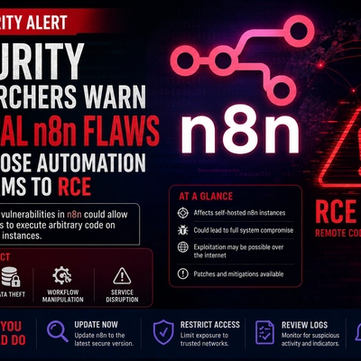
Security Researchers Warn Critical n8n Flaws May Expose Automation Platforms to RCE
Researchers have disclosed critical vulnerabilities in n8n that could expose automation workflows and connected enterprise systems to remote code execution risks, prompting urgent patch recommendations for users and administrators.

How Agentic AI Is Changing Software Engineering and Expanding Mobile Attack Surfaces
Agentic AI is rapidly transforming software engineering workflows through automation and intelligent coding assistance, while cybersecurity experts warn of expanding mobile attack surfaces and emerging application security risks.
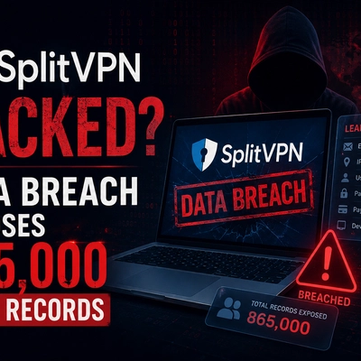
SplitVPN Hacked: Data Breach Exposes 865,000 User Records and 58 Million Hidden Connection Logs (July 2026)
SplitVPN hacked: 865,336 user records and 58 million connection logs exposed, directly contradicting the VPN's "no-logs" promise. What was leaked and what to do now.