
SEBI Expands Cybersecurity Efforts to Counter Emerging AI-Based Financial Threats
## Introduction
India’s financial markets are rapidly evolving with the adoption of artificial intelligence (AI), machine learning, cloud infrastructure, and automated trading systems. While these technologies improve efficiency and innovation, they also introduce sophisticated cybersecurity risks. In response to the growing danger of AI-driven cyberattacks, the Securities and Exchange Board of India (SEBI) has announced the formation of a dedicated task force to combat emerging cyber threats targeting the financial ecosystem.
The move highlights SEBI’s increasing focus on cybersecurity, digital resilience, and data protection within India’s capital markets. Experts believe the initiative could strengthen investor confidence while helping financial institutions prepare for the next generation of cybercrime powered by artificial intelligence.
## Why SEBI Created the AI Cybersecurity Task Force
The rise of AI-driven cyber threats has become a major concern globally. Financial institutions are increasingly being targeted by hackers using advanced AI tools for phishing, identity theft, malware automation, deepfake fraud, and algorithm manipulation.
SEBI’s new cybersecurity task force aims to address several critical issues, including:
- ▸AI-powered phishing attacks
- ▸Deepfake impersonation scams
- ▸Automated stock market manipulation
- ▸Data breaches in trading platforms
- ▸Ransomware attacks against brokers and exchanges
- ▸Vulnerabilities in algorithmic trading systems
- ▸Threats to investor data privacy
Cybersecurity experts warn that AI allows attackers to automate complex attacks at unprecedented speed and scale. Traditional security tools are often unable to detect these evolving threats quickly enough.
By establishing a specialized task force, SEBI intends to proactively monitor risks, improve cyber defense frameworks, and coordinate with financial institutions to strengthen market security.
## Growing Cybersecurity Risks in Financial Markets
India’s financial sector has witnessed rapid digital transformation over the past few years. Online trading platforms, mobile investment apps, fintech services, and AI-driven analytics tools have become mainstream.
However, this digital growth has also expanded the attack surface for cybercriminals.
Major AI-Driven Cyber Threats Affecting Financial Institutions
1. Deepfake Financial Fraud
Cybercriminals are increasingly using AI-generated voice cloning and video deepfakes to impersonate executives, brokers, or financial advisors. These attacks can manipulate employees into transferring funds or revealing confidential information.
2. AI-Powered Phishing Campaigns
Modern phishing attacks use generative AI to create convincing emails, messages, and fake websites that closely mimic legitimate financial institutions. These scams are harder for users to detect.
3. Automated Malware Attacks
AI-enhanced malware can adapt to security environments, bypass detection systems, and launch targeted attacks on trading infrastructure.
4. Algorithmic Trading Manipulation
Hackers may exploit vulnerabilities in AI-based trading algorithms to manipulate stock prices or disrupt automated trading systems.
5. Data Theft and Privacy Risks
Financial platforms store massive amounts of sensitive investor data. AI tools can help attackers analyze stolen datasets faster and identify high-value targets.
## SEBI’s Key Objectives for the Task Force
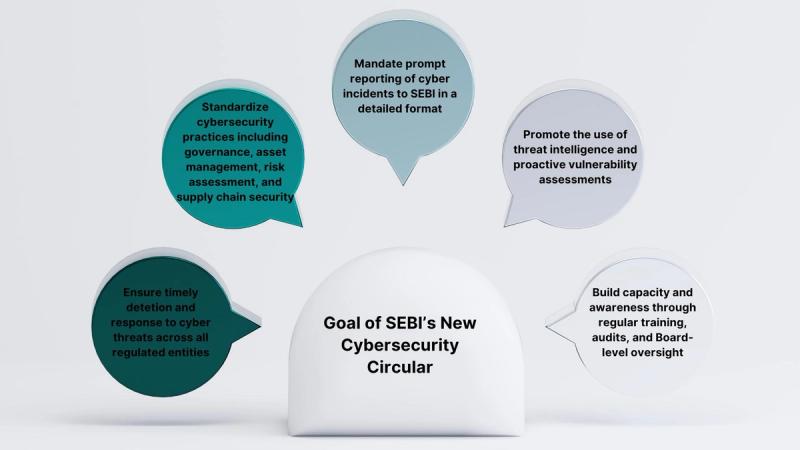
The newly formed SEBI task force is expected to focus on multiple areas of cybersecurity and AI governance.
Strengthening Cybersecurity Regulations
SEBI may introduce stricter cybersecurity compliance rules for:
- ▸Stock exchanges
- ▸Brokerage firms
- ▸Mutual funds
- ▸Depositories
- ▸Fintech platforms
- ▸Investment advisors
These regulations could include mandatory AI risk assessments, incident reporting requirements, and enhanced security audits.
Real-Time Threat Intelligence
The task force will likely work on building a real-time threat intelligence system that allows financial organizations to share cyber threat information quickly.
This collaborative approach can help identify attack patterns and respond to threats faster.
AI Risk Monitoring Framework
SEBI may establish new frameworks for monitoring AI systems used in trading, surveillance, and customer services to ensure they are secure and resistant to manipulation.
Cybersecurity Awareness Programs
Investor awareness campaigns may also become a major focus. Educating investors about phishing scams, fake investment platforms, and deepfake fraud can significantly reduce successful cyberattacks.
## Impact on India’s Financial Sector
The creation of SEBI’s AI cybersecurity task force is expected to have a positive impact across India’s financial ecosystem.
Improved Investor Confidence
Stronger cybersecurity measures can increase investor trust in digital trading platforms and financial institutions.
Better Regulatory Compliance
Financial firms may need to upgrade their cybersecurity infrastructure and adopt advanced security technologies to comply with upcoming regulations.
Increased Demand for Cybersecurity Solutions
The initiative could boost demand for:
- ▸Threat intelligence platforms
- ▸AI-based fraud detection tools
- ▸Endpoint security solutions
- ▸Security operations centers (SOCs)
- ▸Managed detection and response (MDR) services
Enhanced Protection Against Financial Fraud
By proactively addressing AI-driven cyber threats, SEBI aims to reduce large-scale financial fraud incidents and market disruptions.
## Global Trend Toward AI Cybersecurity Regulation
SEBI’s decision aligns with global efforts to regulate AI and cybersecurity in financial systems.
Regulators worldwide are increasingly recognizing the dangers posed by AI-enabled cybercrime. Financial authorities in the United States, Europe, Singapore, and the United Kingdom have also introduced stricter cybersecurity guidelines for financial institutions.
As AI technology continues to evolve, regulators are expected to focus more on:
- ▸AI governance
- ▸Data security
- ▸Digital resilience
- ▸Third-party risk management
- ▸Responsible AI usage
India’s proactive approach demonstrates its commitment to securing financial markets against future cyber risks.
## Challenges Ahead
While the task force represents a major step forward, several challenges remain.
Rapid Evolution of AI Threats
Cybercriminals continuously adapt their tactics. AI-powered attacks evolve faster than traditional defense systems.
Shortage of Cybersecurity Talent
India faces a growing shortage of skilled cybersecurity professionals capable of handling advanced AI threats.
Balancing Innovation and Regulation
Regulators must ensure that cybersecurity measures do not slow down fintech innovation and technological growth.
Coordination Across the Financial Ecosystem
Effective cybersecurity requires collaboration between regulators, banks, brokers, exchanges, fintech companies, and law enforcement agencies.
## Conclusion
The establishment of SEBI’s dedicated task force to tackle AI-driven cyber threats marks a significant milestone in India’s cybersecurity and financial regulation landscape. As cybercriminals increasingly leverage artificial intelligence to target financial institutions and investors, proactive regulatory action has become essential.
By focusing on cybersecurity resilience, AI governance, threat intelligence, and investor protection, SEBI aims to create a safer and more secure digital financial ecosystem.
The initiative also sends a strong message that India is preparing for the future of cyber warfare in the financial sector. As AI technology continues to transform global markets, robust cybersecurity strategies will remain critical to protecting investor trust and ensuring market stability.
Suggested Internal Links for ReconShield
## Analyst Commentary & Implementation Blueprint
Security advisory
Continuous security exposure assessment is critical to identifying public vulnerabilities before they are exploited. Organizations should maintain a passive inventory of all web servers, TLS configs, and open ports, ensuring that default configurations are eliminated and security advisories are actively implemented.
Hardened Security Configuration Blueprint
# General Security Hardening Directive
ServerTokens ProductOnly
ServerSignature Off
FileETag None
Actionable Mitigation Checklist
- ✔Perform passive asset inventories weekly.
- ✔Restrict administrative ports using local firewall controls.
- ✔Monitor active CVE alerts for exposed software.
Common Inquiries & FAQs
Why is passive scanning preferred for continuous auditing?
Passive audits do not cause operational impact or trigger firewall blocks, making them ideal for constant surveillance of internet-facing assets.
What should I do if a vulnerability is flagged?
Apply the latest vendor patches, restrict access to the resource via firewalls, or verify configuration flags to mitigate risks.
Surendra Reddy
Surendra Reddy is a cybersecurity researcher and founder of ReconShield, specializing in OSINT and defensive infrastructure analysis.
Connect on LinkedIn ↗// AUDIT BRIEFING DISCUSSION (2 COMMENTS)
Great breakdown of the passive infrastructure vectors. We recently audited our external DNS zones and found multiple dangling staging environments. Implementing wildcard certificates reduced our CT log leaks significantly.
Is there any automated tooling you recommend for daily crt.sh scraping? Manually checking CT logs is becoming unsustainable for our domain portfolio.
// MORE ARTICLES
Security Researchers Warn Critical n8n Flaws May Expose Automation Platforms to RCE
Researchers have disclosed critical vulnerabilities in n8n that could expose automation workflows and connected enterprise systems to remote code execution risks, prompting urgent patch recommendations for users and administrators.

How Agentic AI Is Changing Software Engineering and Expanding Mobile Attack Surfaces
Agentic AI is rapidly transforming software engineering workflows through automation and intelligent coding assistance, while cybersecurity experts warn of expanding mobile attack surfaces and emerging application security risks.

Critical Tenda Router Backdoor (CVE-2026-11405): Check If Your Device Is Vulnerable Now
CVE-2026-11405 is an unpatched Tenda router backdoor granting full admin access without a password. Check if your model is affected now.