
Google Foils Major Cyberattack Powered by AI-Created Zero-Day Vulnerability
## Google Stops History's First AI-Generated Zero-Day Cyberattack — and Issues a Stark Warning
In a landmark moment for the cybersecurity world, Google has announced it successfully disrupted what is believed to be the first recorded cyberattack leveraging an AI-generated zero-day exploit — a chilling milestone that experts say signals the dawn of a new and dangerous era in digital warfare.
On May 11, 2026, Google's Threat Intelligence Group (GTIG) published a report confirming it had uncovered and likely neutralized a criminal group's plot to launch a mass exploitation event using an AI-discovered software vulnerability. The incident has sent shockwaves through the cybersecurity community, governments, and private enterprises worldwide.
## What Is a Zero-Day Vulnerability — and Why Does AI Make It More Dangerous?
A zero-day vulnerability is a software flaw that is unknown to the developer, giving security teams zero days to patch it before it can be exploited. Traditionally, discovering such vulnerabilities required elite human hackers with deep technical expertise, often spending weeks or months reverse-engineering software.
Now, artificial intelligence is changing the rules.
AI large language models (LLMs) the same technology behind popular chatbots are increasingly capable of scanning complex codebases, identifying logic-level weaknesses, and generating functional exploits at machine speed. This dramatically lowers the barrier for cybercriminals to discover and weaponize previously unknown vulnerabilities, scaling what once required a team of expert hackers into something a well-prompted AI model could accelerate significantly.
## Inside the Google Takedown: What Happened?
According to GTIG's report, the threat actors had identified a critical flaw in a Python script within a popular open-source, web-based system administration tool a tool Google declined to name publicly. The vulnerability allowed attackers to bypass two-factor authentication (2FA), potentially granting unauthorized access to thousands of systems.
Google confirmed it has "high confidence" that an AI model was used to discover and weaponize this vulnerability. Crucially, investigators found telltale signs throughout the exploit code that pointed unmistakably to machine involvement:
- ▸Highly annotated Python code inconsistent with typical human development styles
- ▸Documentation strings that appeared algorithmically generated
- ▸A hallucinated but non-existent CVSS score a numerical rating for vulnerability severity that the AI apparently fabricated
These artifacts led GTIG analysts to conclude that an AI model had been "heavily involved" in producing the exploit. Google noted it was confident the AI model used was neither Google's Gemini nor Anthropic's Claude Mythos though it did not identify which model was responsible.
Upon discovery, Google immediately notified the affected software vendor, coordinated with law enforcement, and helped disrupt the operation before any damage was caused. The vulnerability has since been patched. Software-
More: Defined Vehicles Introduce Growing Cybersecurity Challenges for the Auto Industry
## "The Era of AI-Driven Exploitation Is Already Here"
John Hultquist, chief analyst at Google's Threat Intelligence Group, did not mince words when describing the significance of the discovery.
"It's here. The era of AI-driven vulnerability and exploitation is already here," Hultquist stated. He added that this incident is "probably the tip of the iceberg," warning that there are likely multiple other AI-developed zero-days currently in play across the world's systems.
The GTIG has been monitoring this threat trajectory since at least late 2024, when its own Big Sleep AI agent independently discovered a zero-day vulnerability demonstrating that AI could find flaws that humans had missed. The watershed moment, as Hultquist described it, came roughly two years ago when researchers first proved the concept was possible. Now, it has gone from theory to reality in active criminal operations.
## Nation-State Actors Are Also in the Race
The GTIG report didn't limit its concerns to criminal groups. It also flagged that state-linked hacking groups tied to China and North Korea have demonstrated "significant interest in capitalizing on AI for vulnerability discovery."
This raises the stakes considerably. Nation-state actors typically have more resources, patience, and sophistication than criminal organizations. If rogue governments are integrating AI into their cyberattack workflows and evidence suggests they are the risk to critical infrastructure, financial systems, military networks, and democratic institutions grows substantially.
The report also highlighted the growing threat of AI supply chain attacks, where malicious actors embed harmful code in widely used AI libraries, GitHub repositories, and open-source packages to gain footholds in production environments. In late March 2026, the cybercriminal group "TeamPCP" claimed responsibility for compromising multiple GitHub repositories tied to popular security tools, using malicious packages to steal cloud credentials.
## The Race Between AI Attackers and AI Defenders
The cybersecurity industry is now racing to harness AI defensively just as fast as criminals are deploying it offensively.
OpenAI announced it is releasing a specialized cybersecurity version of ChatGPT, restricted exclusively to defenders protecting critical infrastructure, designed to help organizations proactively find and patch vulnerabilities in their own code. Similarly, Anthropic's Mythos model developed with cybersecurity applications in mind was referenced in multiple expert briefings this week, though Anthropic had reportedly delayed its broader rollout due to concerns about dual-use potential.
Experts are cautiously optimistic about the long-term outlook. AI that excels at coding will, over time, help developers write more secure software, automatically detect bugs before deployment, and accelerate patch cycles. However, they warn of a dangerous transitional period possibly lasting years during which AI tools for exploitation could outpace defensive capabilities.
As one security researcher put it, there are "untold trillions of lines of software code" across the world's systems that remain unaudited and potentially vulnerable. Hardening all of it will take time that adversaries, now armed with AI, may not give the world.
## What This Means for Businesses and Individuals
For businesses, this incident is a wake-up call. AI-powered cyberattacks can now move faster, target deeper, and operate at a scale that traditional cybersecurity frameworks were never designed to handle. Key actions organizations should consider immediately include:
- ▸Auditing 2FA implementations across all critical systems
- ▸Accelerating patch cycles for open-source and third-party tools
- ▸Deploying AI-driven threat detection to keep pace with AI-driven threats
- ▸Training security teams on AI-augmented attack patterns and how to identify machine-generated exploit artifacts
- ▸Reviewing software supply chains for malicious dependencies or tampered packages
For individuals, enabling strong authentication methods, keeping software updated, and staying alert to phishing attempts now potentially AI-crafted for maximum persuasiveness remain the most effective defenses.
## The Bottom Line
Google's disruption of this AI-generated zero-day attack is a landmark moment in the history of cybersecurity. It confirms what experts have long feared: AI is no longer just a tool for defenders it is an active weapon in the hands of attackers.
The incident underscores an urgent need for coordinated action between technology companies, governments, and the security community to establish guardrails on how powerful AI coding capabilities are developed and deployed. As John Hultquist warned, this is just the beginning. The cybersecurity landscape of 2026 is fundamentally different from anything that came before and the world needs to adapt, fast.
More Articles:
Fake Trading App Scam Swindles 600 Victims of ₹99 Crore; Software Engineer Among Three Arrested
Controversy Grows After Cyber Crime Wing Targets Social Media Posts
## Analyst Commentary & Implementation Blueprint
Security advisory
Continuous security exposure assessment is critical to identifying public vulnerabilities before they are exploited. Organizations should maintain a passive inventory of all web servers, TLS configs, and open ports, ensuring that default configurations are eliminated and security advisories are actively implemented.
Hardened Security Configuration Blueprint
# General Security Hardening Directive
ServerTokens ProductOnly
ServerSignature Off
FileETag None
Actionable Mitigation Checklist
- ✔Perform passive asset inventories weekly.
- ✔Restrict administrative ports using local firewall controls.
- ✔Monitor active CVE alerts for exposed software.
Common Inquiries & FAQs
Why is passive scanning preferred for continuous auditing?
Passive audits do not cause operational impact or trigger firewall blocks, making them ideal for constant surveillance of internet-facing assets.
What should I do if a vulnerability is flagged?
Apply the latest vendor patches, restrict access to the resource via firewalls, or verify configuration flags to mitigate risks.
Surendra Reddy
Surendra Reddy is a cybersecurity researcher and founder of ReconShield, specializing in OSINT and defensive infrastructure analysis.
Connect on LinkedIn ↗// AUDIT BRIEFING DISCUSSION (2 COMMENTS)
Great breakdown of the passive infrastructure vectors. We recently audited our external DNS zones and found multiple dangling staging environments. Implementing wildcard certificates reduced our CT log leaks significantly.
Is there any automated tooling you recommend for daily crt.sh scraping? Manually checking CT logs is becoming unsustainable for our domain portfolio.
// MORE ARTICLES

Security Researchers Warn Critical n8n Flaws May Expose Automation Platforms to RCE
Researchers have disclosed critical vulnerabilities in n8n that could expose automation workflows and connected enterprise systems to remote code execution risks, prompting urgent patch recommendations for users and administrators.
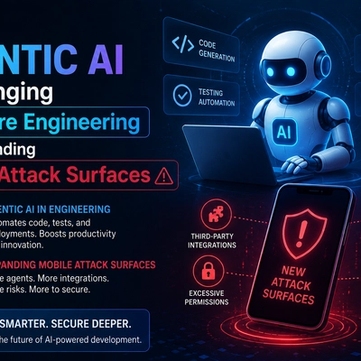
How Agentic AI Is Changing Software Engineering and Expanding Mobile Attack Surfaces
Agentic AI is rapidly transforming software engineering workflows through automation and intelligent coding assistance, while cybersecurity experts warn of expanding mobile attack surfaces and emerging application security risks.

Critical Tenda Router Backdoor (CVE-2026-11405): Check If Your Device Is Vulnerable Now
CVE-2026-11405 is an unpatched Tenda router backdoor granting full admin access without a password. Check if your model is affected now.