
Linux Servers Under Attack by Stealthy PamDOORa SSH Credential Stealer
Cybersecurity researchers have uncovered a newly identified Linux malware strain dubbed PamDOORa, a stealthy backdoor designed to compromise Linux-based systems and steal SSH credentials from targeted environments. The malware is raising concerns across the cybersecurity industry due to its advanced persistence techniques, credential theft capabilities, and focus on Linux infrastructure commonly used by enterprises, cloud providers, and developers.
As Linux servers continue powering critical internet infrastructure, attackers are increasingly shifting their attention toward Linux-focused malware campaigns. PamDOORa appears to be part of this growing trend, targeting organizations that rely heavily on remote administration and secure shell (SSH) access for managing servers.
## What Is PamDOORa?
PamDOORa is a malicious backdoor that abuses the Pluggable Authentication Modules (PAM) framework in Linux systems. PAM is a legitimate authentication mechanism used by Linux distributions to manage user authentication for services such as SSH, sudo, and login sessions.
Threat actors behind PamDOORa modify PAM modules to silently intercept usernames and passwords entered during SSH authentication. This allows attackers to collect valid credentials without triggering suspicion from users or administrators.
Security experts warn that the malware is especially dangerous because it operates at the authentication layer, making detection significantly harder compared to traditional malware.
## How the Attack Works
The attack chain reportedly begins after threat actors gain initial access to a vulnerable Linux system. This could occur through:
- ▸Weak SSH passwords
- ▸Exposed services
- ▸Unpatched vulnerabilities
- ▸Stolen credentials
- ▸Misconfigured cloud servers
Once access is achieved, attackers deploy the PamDOORa backdoor onto the compromised machine.
The malware then injects itself into PAM authentication libraries. When users attempt to log in via SSH, the malware secretly records:
- ▸Usernames
- ▸Passwords
- ▸Authentication timestamps
- ▸Source IP addresses
The stolen information is either stored locally in hidden files or exfiltrated to command-and-control (C2) infrastructure controlled by attackers.
Because SSH is widely used for remote server administration, capturing these credentials can provide attackers with long-term access to sensitive infrastructure.
## Why SSH Credential Theft Is Dangerous
SSH credentials are among the most valuable assets in enterprise environments. A single compromised SSH account can enable attackers to:
- ▸Move laterally across networks
- ▸Access production servers
- ▸Deploy ransomware
- ▸Steal sensitive databases
- ▸Modify applications
- ▸Install additional malware
In cloud-native infrastructures, compromised SSH credentials may even allow attackers to gain access to Kubernetes clusters, CI/CD pipelines, and cloud management environments.
Cybersecurity analysts note that Linux-based attacks are becoming more sophisticated as organizations increasingly migrate workloads to cloud platforms and containerized environments.
## Persistence and Stealth Techniques
PamDOORa reportedly uses multiple persistence mechanisms to survive system reboots and avoid detection.
Researchers observed the malware:
- ▸Modifying PAM configuration files
- ▸Hiding malicious modules within legitimate directories
- ▸Using deceptive file names similar to legitimate system libraries
- ▸Disabling logging functions in certain cases
The malware may also attempt to erase traces of unauthorized access from system logs, complicating forensic investigations.
One of the most concerning aspects of PamDOORa is its low visibility. Since PAM modules are trusted components of Linux authentication systems, traditional antivirus tools may fail to detect malicious modifications.
## Linux Malware Threats Are Rising
For years, Windows systems dominated the malware landscape, but Linux threats are rapidly increasing.
Several factors contribute to this shift:
1. Growth of Cloud Infrastructure
Most cloud servers and containers run Linux distributions, making Linux systems attractive targets for cybercriminals.
2. High-Value Enterprise Servers
Linux systems often host critical databases, web applications, and backend services.
3. Weak Security Configurations
Many organizations expose SSH services directly to the internet without proper hardening.
4. Developer and DevOps Environments
Linux is heavily used by developers and DevOps teams, making credential theft campaigns especially profitable.
Recent years have seen a rise in Linux ransomware, cryptojacking malware, and advanced persistent threats (APTs) specifically targeting Linux servers.
## Indicators of Compromise
Organizations should monitor Linux systems for unusual authentication behavior and unauthorized modifications to PAM-related files.
Potential indicators include:
- ▸Unexpected changes in /etc/pam.d/
- ▸Unknown shared libraries in PAM directories
- ▸Suspicious outbound network connections
- ▸Hidden files storing captured credentials
- ▸Unusual SSH login activity
- ▸Authentication failures followed by successful logins
Security teams should also monitor for privilege escalation attempts and unauthorized cron jobs that may indicate persistence mechanisms.
## How Organizations Can Protect Linux Systems
Defending against Linux credential-stealing malware requires a layered security approach.
Enforce Multi-Factor Authentication (MFA)
MFA significantly reduces the risk posed by stolen SSH credentials.
Disable Password-Based SSH Authentication
Use SSH keys instead of passwords whenever possible.
Restrict SSH Access
Limit SSH exposure using firewalls, VPNs, and IP allowlists.
Monitor PAM Integrity
Regularly verify the integrity of PAM configuration files and authentication libraries.
Apply Security Updates
Patch Linux systems promptly to eliminate vulnerabilities that attackers may exploit.
Use Endpoint Detection and Response (EDR)
Deploy Linux-compatible EDR solutions capable of monitoring authentication processes and suspicious activity.
Centralize Log Monitoring
Collect and analyze logs using SIEM platforms to detect anomalies across infrastructure.
## Security Researchers Warn of Future Variants
Experts believe PamDOORa may evolve further in future campaigns. Malware developers frequently adapt Linux malware to evade security tools and target modern environments such as containers and cloud workloads.
Researchers warn that future variants could include:
- ▸Rootkit functionality
- ▸Encrypted communications
- ▸Automated lateral movement
- ▸Cloud credential theft
- ▸Kubernetes targeting
The discovery of PamDOORa highlights the growing sophistication of Linux-targeted cyber threats and the importance of proactive security measures.
## Final Thoughts
The emergence of PamDOORa serves as another reminder that Linux systems are no longer overlooked by cybercriminals. As enterprises increasingly depend on Linux-powered cloud infrastructure, attackers are investing more resources into developing stealthy malware capable of harvesting credentials and maintaining persistent access.
Organizations should immediately review their SSH security practices, audit PAM configurations, and implement stronger monitoring controls to defend against evolving Linux malware campaigns.
With credential theft continuing to fuel ransomware attacks, espionage operations, and supply chain compromises, securing Linux authentication systems has become a critical cybersecurity priority.
Suggested Internal Links for ReconShield
## Analyst Commentary & Implementation Blueprint
Security advisory
Continuous security exposure assessment is critical to identifying public vulnerabilities before they are exploited. Organizations should maintain a passive inventory of all web servers, TLS configs, and open ports, ensuring that default configurations are eliminated and security advisories are actively implemented.
Hardened Security Configuration Blueprint
# General Security Hardening Directive
ServerTokens ProductOnly
ServerSignature Off
FileETag None
Actionable Mitigation Checklist
- ✔Perform passive asset inventories weekly.
- ✔Restrict administrative ports using local firewall controls.
- ✔Monitor active CVE alerts for exposed software.
Common Inquiries & FAQs
Why is passive scanning preferred for continuous auditing?
Passive audits do not cause operational impact or trigger firewall blocks, making them ideal for constant surveillance of internet-facing assets.
What should I do if a vulnerability is flagged?
Apply the latest vendor patches, restrict access to the resource via firewalls, or verify configuration flags to mitigate risks.
Surendra Reddy
Surendra Reddy is a cybersecurity researcher and founder of ReconShield, specializing in OSINT and defensive infrastructure analysis.
Connect on LinkedIn ↗// AUDIT BRIEFING DISCUSSION (2 COMMENTS)
Great breakdown of the passive infrastructure vectors. We recently audited our external DNS zones and found multiple dangling staging environments. Implementing wildcard certificates reduced our CT log leaks significantly.
Is there any automated tooling you recommend for daily crt.sh scraping? Manually checking CT logs is becoming unsustainable for our domain portfolio.
// MORE ARTICLES
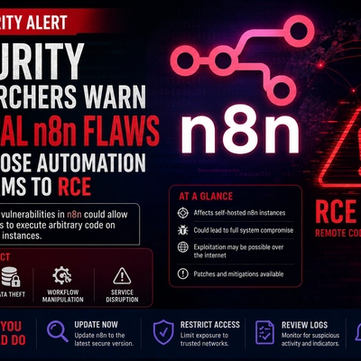
Security Researchers Warn Critical n8n Flaws May Expose Automation Platforms to RCE
Researchers have disclosed critical vulnerabilities in n8n that could expose automation workflows and connected enterprise systems to remote code execution risks, prompting urgent patch recommendations for users and administrators.

How Agentic AI Is Changing Software Engineering and Expanding Mobile Attack Surfaces
Agentic AI is rapidly transforming software engineering workflows through automation and intelligent coding assistance, while cybersecurity experts warn of expanding mobile attack surfaces and emerging application security risks.

Critical Tenda Router Backdoor (CVE-2026-11405): Check If Your Device Is Vulnerable Now
CVE-2026-11405 is an unpatched Tenda router backdoor granting full admin access without a password. Check if your model is affected now.